
The Lotus Blossom Steppes have long been a land of disjointed tribes, squabbling with one another for central rulership. In the past, great rulers laid claim to the Steppes, bringing the tribes under a single banner for a great purpose—be it under the terrible dictatorship of a half-rakshasa khan or an enlightened visionary khan that leads the tribes beyond the borders of the Steppes. Yet there is great power tucked away behind the tribes’ individual banners. All it takes is an individual with enough ambition and enough power to change the destiny of the Lotus Blossom Steppes... and one ambitious man is on the hunt for the fragmented powers of the NewGod war. Can the PCs put an end to a rising warlord's ambitions, or will the Lotus Blossom Steppes fall again into tribal conflict?

The Last Point is a prison and outpost of the Corrive Empire, a realm ruled by a cruel green dragon named Lady Corrive. The Corrivians are well known for their hatred of magic users, and their extensive slave trade industry. A forest realm with coasts on three sides and mountains running through the center, Corrive is rich with a variety of resources. However, the rocky northern coast is out of the way of their navy and relies heavily on hired ships to help transport various goods including prisoners and slaves to isolated outposts, training centers, and slave colonies. The northwest coast of Corrive is rocky and many parts of it are elevated, making it isolated from much of the mainland. The Last Point is a recycling center where captives meant for death row who are either deemed “not important enough” to execute publicly or “too disgraceful” to execute publicly are sent to be tortured and then killed. The place seems to operate on sort of a “well, we have too many so some have to go now” policy. The Last Point has no official deadlines for killing.
The Granddaddy of All Dungeons Returns! Rappan Athuk, the legendary mega-dungeon by Frog God Games and Necromancer Games is nothing more and nothing less than a good, old–fashioned, First Edition dungeon crawl updated for the Pathfinder Roleplaying Game. Very difficult, Rappan Athuk will truly strike fear into the hearts of the most stalwart adventurers. It offers legions of inventive traps, tricks, strange features, and monsters—many of them never before seen. It affords numerous opportunities for roleplaying, but anyone willing to brave these subterranean halls better arrive ready to rumble, or their lives will be short indeed. Many, many players have lost favored PCs delving into the depths of this dungeon, all the while giggling like children and having the time of their lives. Hundreds, if not thousands of players have combed the halls of Rappan Athuk over the years, seeking treasure and fame, making it one of the best-known dungeon locations the game has ever produced. Even players who have never entered its halls know the term: “Don’t go down the Well!” Also available for S&W and broken into multiple adventures. Also see https://paizo.com/store/byCompany/f/frogGodGames/pathfinderRPG/rappanAthuk for expansions for this product.

A prison escape for an unlikely group of heroes turns into a race for an ancient relic sought by the Legion of Dusk. Can you brave the unknown and capture the treasure before the enemy does? This Dungeons & Dragons adventure is set on the plane of Ixalan from Magic: The Gathering. It uses 4th-level characters provided with the adventure.

It is Autumn. Most of the clans of the Great Valley have departed south with the herd animals they depend on for survival. But one small clan lags behind. For seven nights they have been unable to travel, plagued by a terrible monster known as the Night Thing, which has killed their people and wounded more. Your party answers the call of dwarf chieftain Skarna Two-Axe, begging hunters from neighboring clans to pursue and kill the monster that’s been attacking her clan, and that slayed her son. Starting at the chieftain’s clanfire, the characters uncover mysteries about the creature that can only be fully solved by tracking the awful Night Thing to its lair, which is full of frightening apparitions. As the party ventures deeper into the Night Thing's lair, they'll discover an even deeper menace, and a plot to overthrow the chieftain. Only they can save Skarna and her people from the grim machinations of their powerful enemies! Published by Atlas Games
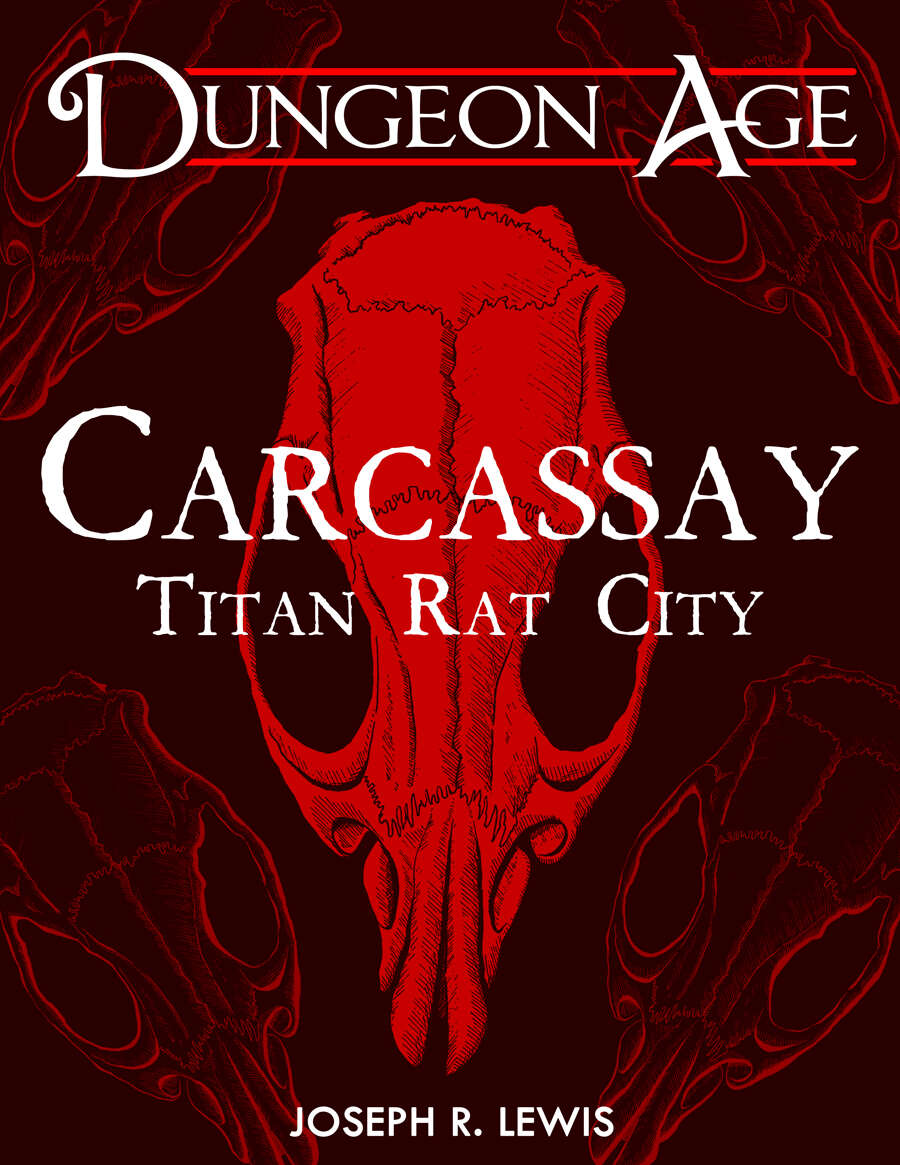
The ancient world of Harth withers beneath its dying sun…but it’s not dead yet. Welcome to the strange and dangerous city of Carcassay, huddled below the skeleton of a titan rat, sprawling above the ruins of countless dead civilizations. This is where folk come to find wealth, power, revenge, secrets, oblivion… and everything in between. Carcassay is a sandbox city adventure. There are many locations to explore in, around, and under the city. Players can explore any place at any time, and may radically reshape the city’s politics, economy, religions, and physical existence. There are standard dungeons stacked under the city, and GMs are encouraged to keep adding more dungeons… all the way down. Tone. It leans more toward low fantasy or sword-and-sorcery. Most shops look like real shops. Most people look like real people. But strange and horrible things lurk everywhere as soon as you start to scratch the surface. This is my Lankhmar. Carcassay is a vast, bizarre city. It has over 100 locations where you can meet Chaos cultists, Lawful knights, retired adventurers, shopkeepers, brewers, musicians, artists, scientists, hermits, royalty, beggars, doctors, space vampires, eldritch horrors, machine priests, crab colonists, mushroom farmers, mummies, assassins, and diplomats from distant lands… and the moon. And every one of them has goods or services to sell, and a quest (or three) to offer. What sort of quests? Fetch a relic, assassinate a rival, find a relative, steal a soul, implant an agent, cure a disease, stop a riot, solve a murder that hasn’t happened yet, hunt a thief, locate a shrine… the list goes on. And for every Quest, there is a specific Reward: money, weapons, relics, Chaos mutations, exclusive memberships, information, Angelic miracles… the list goes on. This is a place where you can make a lot of money, but also where you can spend that money on interesting goods and services. Factions? We have a few. Seven Chaos cults, five knightly orders, two mercenary companies, four wealthy families, six (seven!) Corpse Lords, foreign diplomats, rival innkeepers, rival tavern owners, plus all the dungeon-delving gangs currently mucking about underground. When you grow weary of all the adventures at ground level, there are three classic dungeons buried under the city to explore. This book contains months (if not years) of campaigning. Enjoy the Chaos.
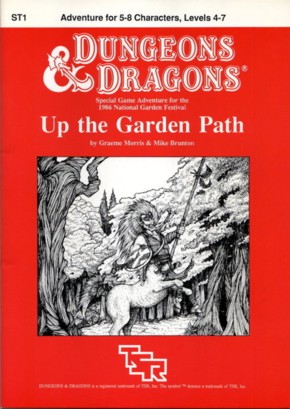
The day has been long and hard and, as night falls, you gratefully surrender to the soft, silent blackness of well-earned sleep. Then the dream comes. You are seated on a throne in a cavern where the sun has never shone; where no voice has ever spoken. Yet you are not alone. Through the darkness, silent figures are moving. Blacker than black... formless yet menacing... advancing towards you from every side... You fell their touch; icy claws plucking at your skin and hair, lifting the throne and carrying you helpless on a journey from darkness into further darkness, from silence into deeper silence. You scream, and a million anguished, reedy voices answer your call. Suddenly you awake... ... and the dream is real. A module printed exclusively in the United Kingdom by TSR UK. Using the 1986 National Garden Festival as its theme, this module was sold both at that festival, and at the 1986 Games Day RPG convention at the Royal Horticultural Society Hall in London (hosted by Games Workshop that Saturday, September 27th). It was briefly mentioned in White Dwarf magazine 82, page 49.

The activities of the party have caused enough chaos to warrant their arrest. With the Felicity Triskelion confiscated, the adventurers await trial at a remote Azorius Arrester Station 13 in Precinct Four. Unfortunately, they are not alone in the holding cells. When a prominent figure of a brutal Gruul clan is also incarcerated, the Gruul lay siege to the Arrester Station. Other parties, interested in the power of the Felicity Triskelion, join the fray in hopes of making off with the relic. When chaos rises in Precinct Four, will the party survive?
The Pyramid of Amra is a challenging adventure designed for characters of at least 12th level. Due to the nature and numbers of undead enemies (vampires), having a cleric on hand with the ability to cast raise dead and greater restoration is advisable. The PCs should be rounded out with a wizard or sorcerer and a pair of front-line fighters. In this adventure, the PCs travel to the Pyramid of Amra and the ancient Monastery of Night, where they face one of the most dangerous of opponents they are likely to meet, C’nosretep the Champion of Set.

A caravan was attacked, and their valuable magical beasts were stolen. The caravan owners hire the adventurers to find their stolen cargo and bring them back safely. But once the heroes find the bandits, they may discover that they are not really just "thieves". Depending on their decision, they may end up travelling to the fey world or battling the bandits for the creatures. A wilderness adventure compatible with the first edition of Pathfinder Roleplaying Game. Whether you want to run an adventure where druid and ranger characters feel at home, or challenge a party of city slickers, Following the Tracks will allow the party to explore the savannah in a wholesome adventure. The module provides a branching point, where the adventurers will have to make a decision which will lead them to widely different paths. It also includes alternative hooks to suit different play styles. Published by RPG Writer Workshop
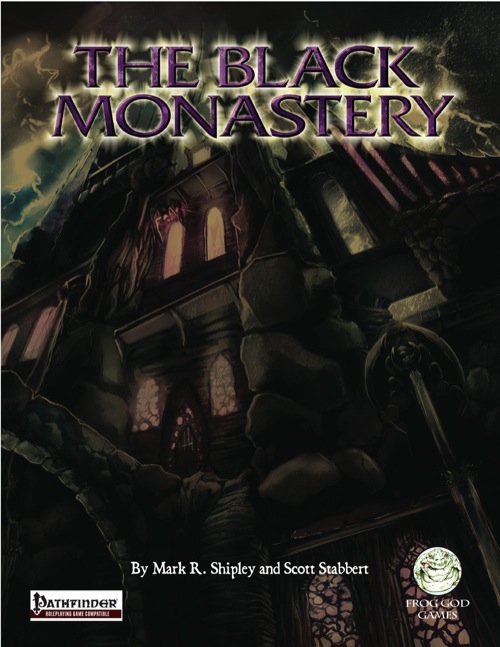
The Legend of the Black Monastery Two centuries have passed since the terrible events associated with the hideous cult known as the Black Brotherhood. Only scholars and story-tellers remember now how the kingdom was nearly laid to waste and the Black Monastery rose to grandeur and fell into haunted ruins. The Brothers first appeared as an order of benevolent priests and humble monks in black robes who followed a creed of kindness to the poor and service to the kingdom. Their rules called for humility and self denial. Other religious orders had no quarrel with their theology or their behavior. Their ranks grew as many commoners and nobles were drawn to the order by its good reputation. The first headquarters for the order was a campsite, located in a forest near the edge of the realm. The Brothers said that their poverty and dedication to service allowed them no resources for more grand accommodations. Members of the Black Brotherhood built chapels in caves or constructed small temples on common land near villages. They said that these rustic shrines allowed them to be near the people they served. Services held by the Brothers at these locations attracted large numbers of common people, who supported the Black Brotherhood with alms. Within 50 years of their first appearance, the Black Brotherhood had a number of larger temples and abbeys around the kingdom. Wealthy patrons endowed them with lands and buildings in order to buy favor and further the work of the Brothers. The lands they gained were slowly expanded as the order’s influence grew. Many merchants willed part of their fortunes to the Black Brotherhood, allowing the order to expand their work even further. The Brothers became bankers, loaning money and becoming partners in trade throughout the kingdom. Within 200 years of their founding, the order was wealthy and influential, with chapters throughout the kingdom and spreading into nearby realms. With their order well-established, the Black Brotherhood received royal permission to build a grand monastery in the hill country north of the kingdom’s center. Their abbot, a cousin of the king, asked for the royal grant of a specific hilltop called the Hill of Mornay. This hill was already crowned by ancient ruins that the monks proposed to clear away. Because it was land not wanted for agriculture, the king was happy to grant the request. He even donated money to build the monastery and encouraged others to contribute. With funds from around the realm, the Brothers completed their new monastery within a decade. It was a grand, sprawling edifice built of black stone and called the Black Monastery. From the very beginning, there were some who said that the Black Brotherhood was not what it seemed. There were always hints of corruption and moral lapses among the Brothers, but no more than any other religious order. There were some who told stories of greed, gluttony and depravity among the monks, but these tales did not weaken the order’s reputation during their early years. All of that changed with the construction of the Black Monastery. Within two decades of the Black Monastery’s completion, locals began to speak of troubling events there. Sometimes, Brothers made strange demands. They began to cheat farmers of their crops. They loaned money at ruinous rates, taking the property of anyone who could not pay. They pressured or even threatened wealthy patrons, extorting money in larger and larger amounts. Everywhere, the Black Brotherhood grew stronger, prouder and more aggressive. And there was more… People began to disappear. The farmers who worked the monastery lands reported that some people who went out at night, or who went off by themselves, did not return. It started with individuals…people without influential families…but soon the terror and loss spread to even to noble households. Some said that the people who disappeared had been taken into the Black Monastery, and the place slowly gained an evil reputation. Tenant farmers began moving away from the region, seeking safety at the loss of their fields. Slowly, even the king began to sense that the night was full of new terrors. Across the kingdom, reports began to come in telling of hauntings and the depredations of monsters. Flocks of dead birds fell from clear skies, onto villages and city streets. Fish died by thousands in their streams. Citizens reported stillborn babies and monstrous births. Crops failed. Fields were full of stunted plants. Crimes of all types grew common as incidents of madness spread everywhere. Word spread that the center of these dark portents was the Black Monastery, where many said the brothers practiced necromancy and human sacrifice. It was feared that the Black Brotherhood no longer worshipped gods of light and had turned to the service of the Dark God. These terrors came to a head when the Black Brotherhood dared to threaten the king himself. Realizing his peril, the king moved to dispossess and disband the Black Brother hood. He ordered their shrines, abbeys and lands seized. He had Brothers arrested for real and imagined crimes. He also ordered investigations into the Black Monastery and the order’s highest ranking members. The Black Brotherhood did not go quietly. Conflict between the order and the crown broke into violence when the Brothers incited their followers to riot across the kingdom. There were disturbances everywhere, including several attempts to assassinate the king by blades and by dark sorcery. It became clear to everyone that the Black Brotherhood was far more than just another religious order. Once knives were drawn, the conflict grew into open war between the crown and the Brothers. The Black Brotherhood had exceeded their grasp. Their followers were crushed in the streets by mounted knights. Brothers were rounded up and arrested. Many of them were executed. Armed supporters of the Black Brotherhood, backed by arcane and divine magic, were defeated and slaughtered. The Brothers were driven back to their final hilltop fortress – the Black Monastery. They were besieged by the king’s army, trapped and waiting for the king’s forces to break in and end the war. The final assault on the Black Monastery ended in victory and disaster. The king’s army took the hilltop, driving the last of the black-robed monks into the monastery itself. The soldiers were met by more than just men. There were monsters and fiends defending the monastery. There was a terrible slaughter on both sides. In many places the dead rose up to fight again. The battle continued from afternoon into night, lit by flames and magical energy. The Black Monastery was never actually taken. The king’s forces drove the last of their foul enemies back inside the monastery gates. Battering rams and war machines were hauled up the hill to crush their way inside. But before the king’s men could take the final stronghold, the Black Brotherhood immolated themselves in magical fire. Green flames roared up from the monastery, engulfing many of the king’s men as well. As survivors watched, the Black Monastery burned away, stones, gates, towers and all. There was a lurid green flare that lit the countryside. There was a scream of torment from a thousand human voices. There was a roar of falling masonry and splitting wood. Smoke and dust obscured the hilltop. The Black Monastery collapsed in upon itself and disappeared. Only ashes drifted down where the great structure had stood. All that was left of the Black Monastery was its foundations and debris-choked dungeons cut into the stones beneath. The war was over. The Black Brotherhood was destroyed. But the Black Monastery was not gone forever. Over nearly two centuries since its destruction, the Black Monastery has returned from time to time to haunt the Hill of Mornay. Impossible as it seems, there have been at least five incidents in which witnesses have reported finding the Hill of Mornay once again crowned with black walls and slate-roofed towers. In every case, the manifestation of this revenant of the Black Monastery has been accompanied by widespread reports of madness, crime and social unrest in the kingdom. Sometimes, the monastery has appeared only for a night. The last two times, the monastery reappeared atop the hill for as long as three months…each appearance longer than the first. There are tales of adventurers daring to enter the Black Monastery. Some went to look for treasure. Others went to battle whatever evil still lived inside. There are stories of lucky and brave explorers who have survived the horrors, returning with riches from the fabled hordes of the Black Brotherhood. It is enough to drive men mad with greed – enough to lure more each time to dare to enter the Black Monastery.
Sewers of the Underguild is an adventure designed for characters of at least 11th level, and characters up to 15th level will find plenty of challenges. Hidden within these narrow passages and filth-filled channels is a guild of vampiric rogues, led by their master Sangre and his aide, a nycaloth called Ankoz. Deadly traps abound, so a skillful rogue will be a lifesaver. Because of the high likelihood of desperate combat with numerous vampiric and monstrous opponents, it is suggested that a cleric and at least two fighters be prepared to beat back the many watchdog monsters the guild employs. You can hide the locales in Sewers of the Underguild in any ruin or location that fits your campaign purposes. A thriving metropolis that just happens to have a large crime and vampire problem would fit the bill nicely. In the Lost Lands campaign setting of Frog God Games, the Underguild is located in the sewers beneath the ruins of Curgantium, the ancient imperial capital of lost Hyperboria. Located at the edge of the modern Kingdom of Foere, the Underguild still finds itself located centrally enough to pull the strings of its weblike network running throughout the former lands of the Hyperborian Empire.

A Gritty OSR Fantasy Setting by Travis Legge The mortal lands are divided. A dozen kingdoms lie scattered across the world, separated by dangerous wilds filled with bandits and monsters. The bravest mortals act as adventurers, guiding travelers between the kingdoms, killing monsters to thin their numbers, and plundering ruins in search of the lost treasures of the golden age. This is the world of Odysseys & Overlords! The party are traveling west through the Untamed Gauntlet, on their way to somewhere else and using a stream to guide their steps. They step out from under the eaves of the forest to spy looming before them a cliff, a tall wall of stone which stretches away to either side as far as they can see. A waterfall cascades onto sharp rocks into a pool from which pours the stream they were following. The sheer cliff is easily 100 feet high, and too wet and slick to climb safely, though it can be tried. Atop the cliff is a bare stone hill which looks like it was at one time worked by intelligent hands; a look-out post of sorts has been carved into its southernmost peak. The map says it’s called “Wyvernseeker Rock,” but it doesn’t say why. The hill appears deserted. A long age ago, beyond mortal memory, a forgotten people built a watching post and refuge atop and within Wyvernseeker Rock. A hundred years ago, an adventurer named Olaf Wyvernseeker claimed the Rock for his own and set out with companions to clear the lands thereabouts. They were never heard from again. The upper chambers of the Rock are a convenient lair for a Giant Rhadogessa and its spider servants. Still, it’s got to be safer than climbing the cliff. Right? Published by Aegis Studios

God of Ore is a 3rd-level adventure that takes the characters from the quiet, mountainside town of Miners’ Refuge into the heart of the Stoneheart Mountains in pursuit of a failed pilgrimage to discover a phony religious relic deep inside legendary Mithral Mountain. The dark, twisting tunnels that bore into the fabled mountain soon reveal that some mysteries are not what they first appear to be.

A new adventure based in Ravnica featuring one of the best guilds: IZZET LEAGUE! Congratulations! You’ve won an exclusive tour of Dr. Skulldial’s elemental lab as part of an Izzet League PR event. Unfortunately, she's fazed out of reality currently. As you venture forth solving puzzles to get further inside the mansion and laboratory, events unfold leading you to believe your missing host is missing for a particular reason.

The company discovers the Easterly Inn, a piece of the Shire in the land of the Beornings. But the Wild is still the Wild, and it takes more than Hobbit cooking to keep adventures at bay; in no time, the companions find themselves involved in the search for a missing trade caravan. Their quest will put them on the road to the High Pass, and see them go over hills and under hills. Published by Cubicle7

Deep in the wooded wilderness, the village of Grimmsgate is an outpost town on a seldom-traveled trail, right at the edge of nowhere. The village’s half-ruined temple of Law, dilapidated inn, drunken blacksmith, exiled trader and a few fur-trappers are enough to keep the bloody-minded denizens of the dark forest at bay, but nobody really expects the village to still be there in another ten years. The woods have become too dangerous for the trappers who once caught animals for fur, and merchants no longer travel the poorly-maintained road. What great evil and what fabulous treasures are to be found in these lands? A brave band of adventurers might make their fortunes here. Or perhaps they might never return… Grimmsgate is an introductory adventure for the Swords & Wizardry tabletop roleplaying game. The Swords & Wizardry rules are needed to play this adventure.
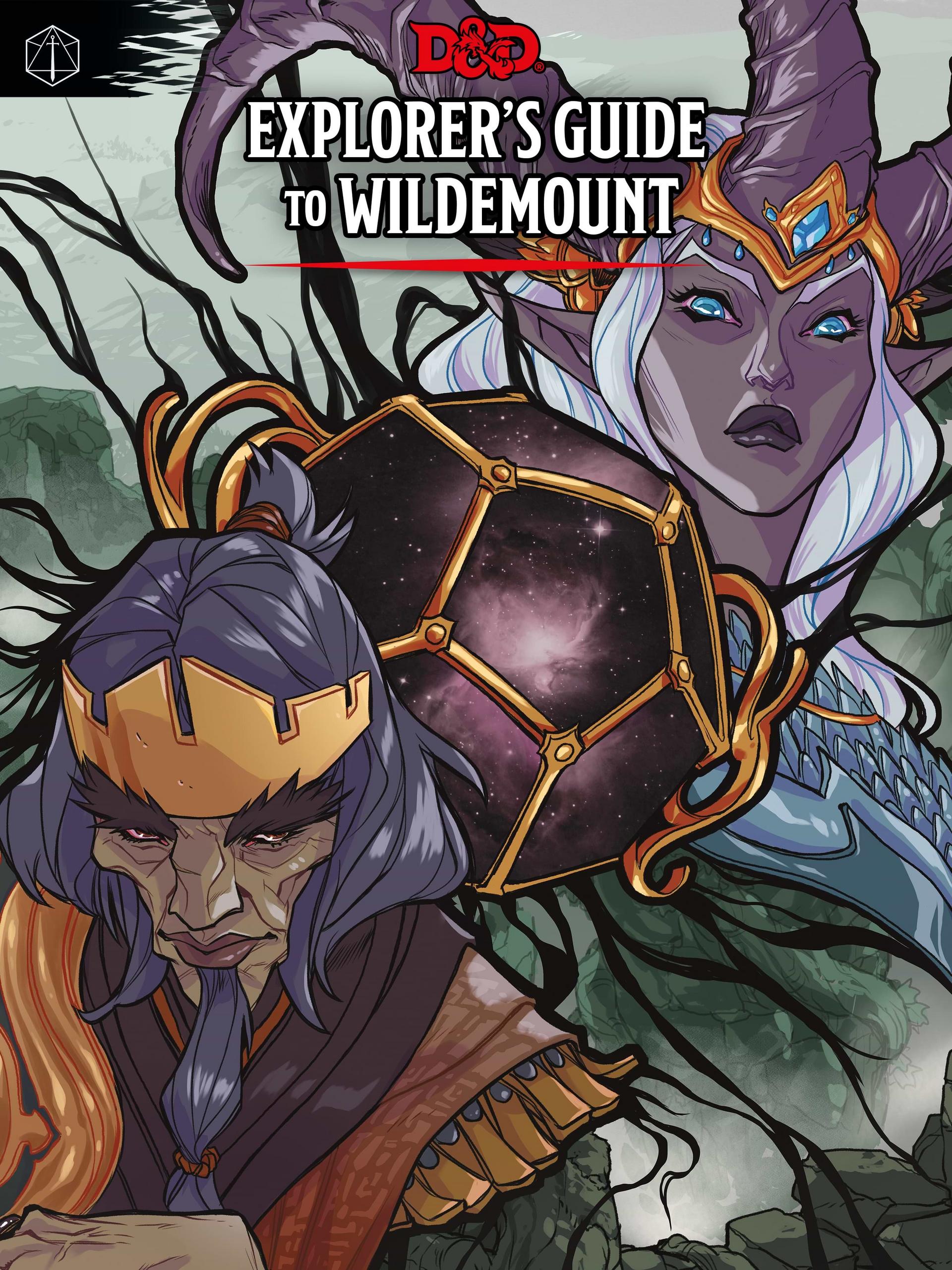
An elder warlock from the goblinoid swamp village of Urzin has been kidnapped by soldiers of the Dwendallion Empire. Now the machinations of an evil imperial inquisitor might unleash an evil that could threaten the garrison at Fort Venture and the goblinoids of Urzin alike.
Sorrowwraiths is an adventure path about hunting monsters, helping allies through hard times, and saving communities in a city that is almost beyond saving. Dive into an industrial dystopia of poverty, pollution and exploitation, where laws and morality apply only to the poor, where technological progress overtakes ethical concerns, and where myriad monsters and curses prey upon the population. The city has lost its last group of protectors and someone new needs to pick up the torch... Allies in the Dark is Part One (of Five) and takes characters from 1st to 6th level. The heroes are introduced to the city and its issues. They get to investigate the disappearance of the Lochtengren's previous defenders, rescue and recruit some of them as allies, and expose the schemes of those who have turned villainous.

In this adventure players are set first on a simple task, to solve the disappearance of the local witch before outside forces take an interest. But as the players get deeper, they will rapidly kind themselves on a quest for far more, as they range from an alchemist's lair on a crumbling tower down to a dark swamp full of mystery and danger, seeking a holy relic that might lead them to the outskirts of Hell itself. All in service of the sleepy Village Sujeira and the dusty souls within. 1452: Saving Sujeira’s Soul is an adventure set in northern Portugal on an alternate history Earth during the year 1452, in a world where history is much the same, but for the fact that the Rus are all hirsute dwarves, the hordes that poured out of central Asia were orcish (and half-orcs are mostly janissaries split among the Ottoman Empire’s demesnes), and elves are creatures of rumors and myth. Halflings live among the English and Portuguese in villages and farms, while goblins are pests best left for dead in the wilds between civilized countries. The Church arms its inquisitors with holy blessings, for witches are not mere milk-souring old women but vile devil-pacted souls, and wizards and sorcerers seek human and kine for sacrifices to fuel their darkling magics. There be dragons on the edges of the world, and ogres and sea serpents and giants, but the alchemists of this world know things beyond mortal ken and fight these horrors with science and canny concoctions. Published by Coldlight Press