
A deathpriest hierophant of Orcus has turned the lower catacombs of a cemetery into a base for the undead and demonic horde it is gathering. The deathpriest loses control, however, with the arrival of a balor, and its carefully orchestrated forays to snatch victims have turned into wholesale slaughters. The PCs arrive in a nearby town to meet with a merchant who promised to sell them a long-coveted magic item. They are not altogether pleased to arrive to find the aftermath of a brutal attack—and no sign of their item. Pgs. 150-155

The adventurers are asked to search for a local temple official who has not returned after leaving to search for a hidden treasure vault. On their way, they are attacked by some Kobolds and chase the fleeing monsters to the hidden entrance. The adventurers explore the ruins and discover what has become of the missing temple official.
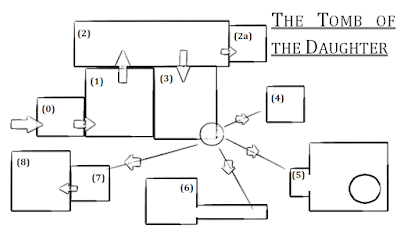
The adventure text was written by a neural network (Talk to Transformer) and compiled by a human editor. It is surprisingly usable. The adventure is centered upon the dangerous and thoroughly weird Tomb of the Daughter, the burial place and temple of an ancient Goddess. Explore several rooms connected by teleport systems, fight strange creatures, and perhaps thwart a demon summoning.

Your expedition to the wastelands proved fruitless until you came across a group of Bedouins. The locals report that they may have found a tomb hidden below the swirling desert sands. Intrigued, you and your group examine the site unaware that you are about to stumble into the deadly Gonnagetcha Tomb!
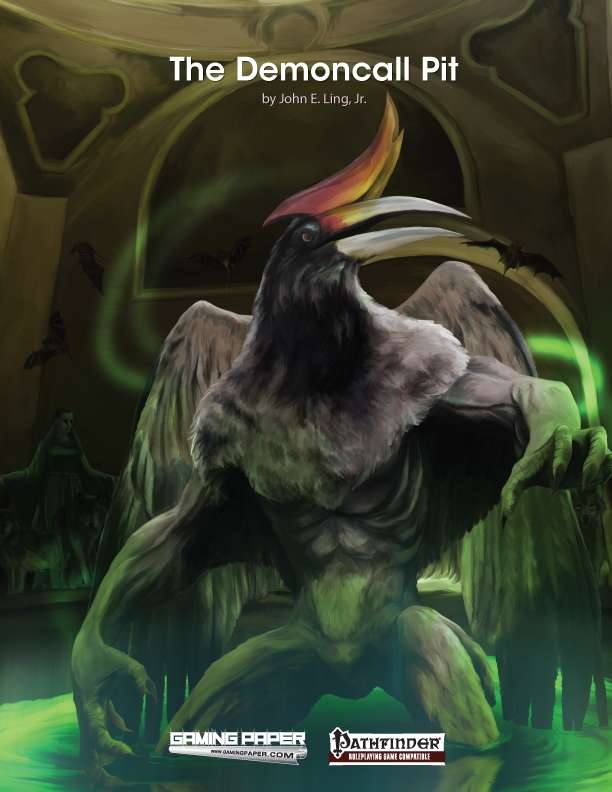
It’s finally happened! The Demoncall Ritual has begun, and creatures from the Abyss are streaming out through the Cellend family crypt. Heroes are needed, not only to slay the demons and stop the ritual, but to accept the risk of reversing the ritual to seal the Demoncall Pit forever.

From time out of mind, the standing stones known as the Circle of Cahervaniel have stood lonely vigil on a grassy hilltop. Sheepherders once moved their flocks over the hill and through the circle, sometimes resting in the cool shadows cast by the ancient stones. Everything changed when a stone finger fell, revealing a fissure in the earth. Now, dark shadows caress the circle after the sun sets. Creatures out of nightmare dance upon the hillside at night. Many swear that a unicorn of deepest ebony now hunts all upon two legs who draw near, while stunted creatures scurry in the shadows, abducting sheep from their sheds and drawing them down below ground for food. After the disappearance of a sheperd, fear grows stronger in neighboring villages. Who will brave the black hollow of the ancient Circle of Cahervaniel? Heroes of stern mettle must descend into the cavity and explore the ancient spaces existing there. Product History "The Shattered Circle" (1999), by Bruce R. Cordell, is a generic adventure for AD&D 2e. It was published in January 1999. Origins: Another Generic. After Wizards of the Coast began publishing D&D, their first year and a half of generic adventures were all classic revivals: returns to RPGA tournaments, to classic adventures, and to Dungeon scenarios. Even "A Paladin in Hell" (1998) was a return in its own way, to the demons and devils that TSR had become afraid of. Wizards was staking out new ground by reclaiming the past. "The Shattered Circle" (1999) was the first generic Wizards adventure that was simply a generic adventure, with no deeper origins and no hidden motives. Artifacts of Note. the foundingstone and the harp Euphonious are both one-off named magic items. However, it's sword Icerazor that's the most interesting. It's said to have grown from a shard of Frostrazor — a sword that would only appear ten months later in Return to White Plume Mountain (1999). There, it's listed as one of Keraptis' four implements of power, alongside Wave, Blackrazor, and Whelm — meaning that Icerazor (and this adventure) are just one step removed from White Plume Mountain itself. Monsters of Note: Chitine. It's somewhat curious, given the Greyhawk and Neverness connections, to note that the chitine debuted in MC11: "Monstrous Compendium Forgotten Realms Appendix" (1991). The spider-humanoids have generally been a Realms creature, featuring in bestiaries and histories for that setting. However, they also received a more generic "Ecology of the Chitine" in Dragon #223 (November 1995), which introduced the choldrith, or chitine priestess. This is their major adventure appearance. When asked about pronouncing their name Cordell says that he "can't be 100% sure of the original designer's pronunciation", but he prefers "KI-TEEN". About the Creators. By 1999, Cordell was one of D&D's most prolific writers. He'd previously authored many slightly related adventures, such as The Gates of Firestorm Peak(1996) and the sahuagin (1997) and illithid (1998) Monstrous Arcana adventure trilogies. This conversion guide allows DMs to run the original module with 5th Edition rules. To use this conversion guide you will need a copy of The Shattered Circle, originally available in hard-copy and now for sale in Digital format at the DMs Guild. This adventure is a generic adventure, not specifically based in any existing setting. Suggestions are given in the conversion guide to place the adventure in the Forgotten Realms.
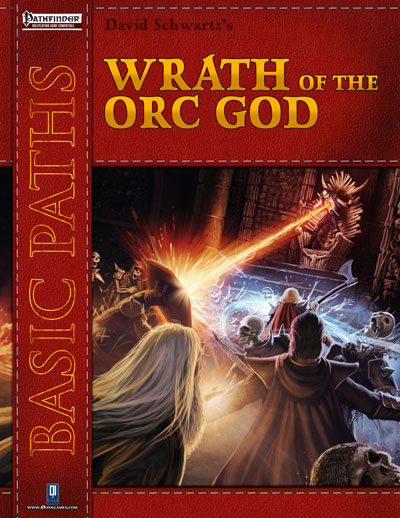
In the town of Gafolweed, the market is in disarray: toppled barrows and collapsed tents spill their contents onto the muddy ground. Merchants and locals flee the scene as you arrive. In the midst of the destruction stands a muscular, green-skinned humanoid—an orc! Three bodies lie near his feet, the victims of his bloody axe. He turns to you, a vivid red tattoo of a bleeding eye prominent on his brow. The orcs are gathering in numbers unseen in many generations and make war upon the people of the Borderlands. The cause of this deadly conflict is entwined with the history of the unholy mark that all the orcs now bear. Will your fellowship of budding heroes be able to quell the Wrath of the Orc God?

Trouble Cubed is a is a pseudo-adventure with three interesting gelatinous cube encounters. These three encounters are structured in a way that they can be used together as one adventure, or each individually dropped into any adventure from EL5 to 7. The encounters vary the cube's encounter situation significantly, and the tactics needed to deal with them, such as by trapping a character with a portcullis between a cube and a pit trap, placing a cube half down a pit trap, and having the cube accidentally ingest a beneficial potion (such as spider climb). Pgs. 29-30

For years the Verbeeg clan on Clover Island has lived peacefully with the human settlement of Corsair Bay. A peace treaty has remained in effect that both groups attested to and have lived by. Recently the annual tribute that is to be paid to the giants has not come and now the giants are preparing for battle. Can your party go and act as an envoy to the giants or will they choose to go to war against them?

Expand your game with this collection of 56 NPCs of various Challenge Ratings, thirteen of which include maps and details of their lairs. Add these NPCs as a side-quest, a main villain, a one-shot, a bounty for easy money, or however else you wish. Written by some of the best-selling authors on the Dungeon Masters Guild and outstanding podcasters, each NPC includes an image, a backstory, motives, flaws, and a stat block. Some even include new magic items!

Just as the trail led from the STEADING OF THE HILL GIANT CHIEF to the frozen wastes where was found the GLACIAL RIFT OF THE FROST GIANT JARL, so the adventure in the latter place has let (or transported) the intrepid party to what they hope will be their last challenge. They are about to venture into the hot and smoking barrens which are in effect Muspelheim, the home of fire giants. This module contains background information, referee's notes, three level maps, and exploration matrix keys. It provides a complete module for play of ADVANCED DUNGEONS & DRAGONS, and it can be used alone or as the last of a three-part expedition adventure which also employs DUNGEON MODULE G1 (STEADING OF THE HILL GIANT CHIEF and DUNGEON MODULE G2 (GLACIAL RIFT OF THE FROST GIANT JARL). TSR 9018

For as far back in time as the tales of history stretch, the area bordering what is now the Lands of Launewt has been a foreboding, practically impenetrable forest. When the lords who ruled the various borderlands united to form the Council of Launewt a century ago, the forest was in the same physical condition as it is now: thick, dark, and expansive, said to be so dense at the center that sunlight pervaded the foliage only on the brightest days. Pgs. 41-56

In the far reaches of the world, under a lost and lonely hill, lies the sinister Tomb of Horrors. This labyrinthine crypt is filled with terrible traps, strange and ferocious monsters, rich and magical treasures, and somewhere within rests the demilich. Remake of the original AD&D adventure.
Long ago, before the arrival of civilized humanoids, a large colony of ogres thrived in the local area. When a great invasion from another dimension threatened this colony, their king, Koptila, prayed for his people to be spared. The gods heard these pleas, but commanded Koptila to sacrifice himself. The leader did so, and the clan disappeared—whisked away by the gods and lost to time. Over the years, a city grew up above the former subterranean home of the ogres, and no aspect of Koptila’s ancient bargain was preserved or remembered. Even so, the stars are aligned for the return of Koptila and his people. These powerful repatriates are unlikely to appreciate the changes in their old home. A sage has found dusty documents prophesying this return, and he asks the PCs to investigate the catacombs to defeat the potential threat to the city. The PCs travel down through city sewers and subterranean passages before finding the catacombs that the ogre colony once called home. Pgs. 48-53
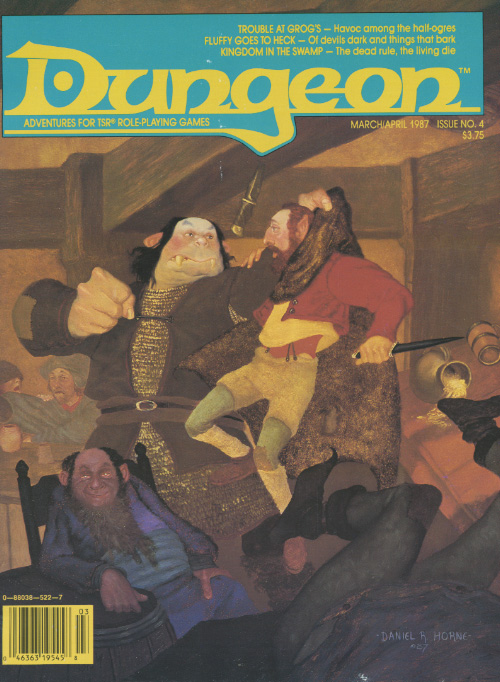
Follow a crazy halfling into a vampire’s castle. Kingdom in the Swamp is an AD&D adventure for higher-level characters; 6th to 9th level would be suitable. While it is necessary to have strong combatant characters and at least one cleric, it is more important that the players be ready to find solutions beyond the sword or spell book. Adventure Background A few days ago, Candor Pletten, a halfling thief known more for his urban exploits, returned from a journey to the southern jungles and rain forests (or so he says). Few people have believed him in the past -- usually they have been too busy taking inventory of their possessions to even listen to him — but some are guessing that he may actually be telling the truth (certainly, he’s got a good story). Candor left town a couple of months ago with some other adventurers, but has come back alone. Most tavern patrons are of the opinion that he took his companions’ purses and ran, but why would he come back to town? And why, then, aren’t his former companions hot on his trail? Candor may be a thief, but he’s not a murderer. He even gets nauseated by cockfighting. Maybe the halfling's tale is worth hearing...

𝐍𝐨𝐰 𝐰𝐢𝐭𝐡 𝐚𝐧 𝐢𝐥𝐥𝐮𝐬𝐭𝐫𝐚𝐭𝐢𝐨𝐧 𝐛𝐲 𝐂𝐇𝐑𝐈𝐒 𝐇𝐎𝐋𝐌𝐄𝐒 𝐚𝐧𝐝 𝐚 𝐏𝐑𝐈𝐍𝐓𝐄𝐑-𝐅𝐑𝐈𝐄𝐍𝐃𝐋𝐘 𝐃𝐔𝐍𝐆𝐄𝐎𝐍 𝐌𝐀𝐏! 𝐓𝐇𝐄 𝐑𝐔𝐈𝐍𝐄𝐃 𝐓𝐎𝐖𝐄𝐑 𝐎𝐅 𝐙𝐄𝐍𝐎𝐏𝐔𝐒 is a fifth edition (5E) conversion of the ground-breaking introductory adventure for Dungeons & Dragons that served as a DM aid in the first 𝐃&𝐃 𝐁𝐚𝐬𝐢𝐜 𝐒𝐞𝐭, released by TSR in 1977. This set included a 48-page rulebook covering the first three levels of play, and was skillfully edited by 𝐃𝐫. 𝐉. 𝐄𝐫𝐢𝐜 𝐇𝐨𝐥𝐦𝐞𝐬 from the original 1974 D&D rules written by 𝐆𝐚𝐫𝐲 𝐆𝐲𝐠𝐚𝐱 and 𝐃𝐚𝐯𝐞 𝐀𝐫𝐧𝐞𝐬𝐨𝐧. Holmes advanced the "Sample Dungeon" concept by writing a new thematic dungeon with a strong backstory, creating an adventure that has remained a fan favorite over the decades. Officially, its only title is "Sample Dungeon" but colloquially it goes by various names based on Zenopus, the doomed wizard who built the dungeon under his tower. An adventure for 1st to 2nd level characters; four pregenerated characters are included. Also includes ideas for using it as an adventure site in 𝐆𝐡𝐨𝐬𝐭𝐬 𝐨𝐟 𝐒𝐚𝐥𝐭𝐦𝐚𝐫𝐬𝐡. 𝐍𝐎𝐓𝐄: Using this conversion requires a copy of the original dungeon found in the (1977) Basic D&D rulebook. However, Wizards of the Coast has provided a free pdf of this dungeon since 2008 on their website, see the first page of the pdf for the link. 𝐂𝐎𝐍𝐓𝐄𝐍𝐓𝐒: Introduction, page 2 The Setting, page 3 About the Dungeon, page 4 Dungeon Master's Map, page 5 Areas of the Dungeon, pages 6-13 Appendix A: Further Reading, page 13 Appendix B: Dungeon Factions, page 14 Appendix C: Portown Rumors, pages 15-17 Appendix D: Use with Ghosts of Saltmarsh, pages 18-19 Appendix E: Pre-generated 1st level characters, page 20 𝐈𝐧𝐜𝐥𝐮𝐝𝐞𝐬 𝐭𝐡𝐞 𝐟𝐨𝐥𝐥𝐨𝐰𝐢𝐧𝐠 𝐧𝐞𝐰 𝐦𝐨𝐧𝐬𝐭𝐞𝐫𝐬, 𝐍𝐏𝐂𝐬, 𝐚𝐧𝐝 𝐌𝐚𝐠𝐢𝐜 𝐈𝐭𝐞𝐦𝐬 𝐟𝐨𝐫 𝟓𝐄: Cleaning Cube, Veteran Smuggler, Thaumaturgist, Monstrous Sand Crab, Lemunda, Monstrous Rat, Brazen Head of Zenopus, Verminslayer Longsword, Lesser Wand of Petrification, Scroll of Stone to Flesh The Ruined Tower of Zenopus was featured as part of the "D&D Classics" column in Issue #32 of Dragon+ magazine! Go to 𝐝𝐫𝐚𝐠𝐨𝐧𝐦𝐚𝐠.𝐜𝐨𝐦 or find the link on the Wikipeda page for Dragon magazine. 𝐂𝐑𝐄𝐃𝐈𝐓𝐒: Original Dungeon: J. Eric Holmes Conversion, Added Content & Cartography: Zach Howard Content Review & Editing: Scott McKinley Interior Art: Chris Holmes (“Octopus Attack”, page 9) Cover Art: “Italian Coast Scene with Ruined Tower” by Thomas Cole, 1838. Open Access Image from the National Gallery of Art at images.nga.gov Format: Derived from the “Adventure Template for Open Office/LibreOffice” by Dale Robbins on DMs Guild Dungeon Maps drawn using the application Gridmapper by Alex Schroeder

Centuries ago, a beholder named Yeryl fled from the place of his birth and wandered the countryside in search for a place to call home. After many sleepless nights spent carving out a safe nook for himself in the wilderness, he at last slipped into slumber. In his dreams, he found an ideal place for his lair: long-abandoned ruins hidden amidst a dull and barren valley. Yeryl spent years transforming the place to suit his paranoid designs. Visitors were rare enough, and the few that made it to Yeryl’s lair were quickly destroyed or forced into the beholder’s service, building the lair ever deeper and more magnificent. As time went on, Yeryl finally completed his task. Safe at last, but with nothing to occupy his mind, Yeryl was struck by melancholy; was this lonely and empty life truly what he had chosen for himself? On that day, Yeryl made a decision: next time an adventurer came to his lair, he would welcome them in. With this resolution in mind, Yeryl began to dismantle his traps and replace them with ones he considered to be more fun. Unfortunately, for all his good intents, Yeryl has not yet realised that killing people is a bad way of getting them to like him. Yeryl's Super Happy Fun Murder Dungeon is a highly obnoxious and mildly ridiculous collection of traps, combat and puzzles designed to test your players' wits and patience. It is optimised for a group of four to five 3rd level players, but the text also contains a guide for level adjustments for different sized groups.

The country of Rhyl has been beset nearly every night for many years by a large, terrible creature that flies out from the mountains near the city of Asereht. Nearly a year ago the creature broke through the wall of King Namreh’s castle and carried off the king’s son, Prince Laechim, along with a large amount of the royal treasure. After the creature’s raid on the castle, King Namreh ordered his army to search the mountains and discover Astylis’ complex. The soldiers made two forays into the mountain wilderness, but each time were harassed and eventually driven back by goblin raiders. Since the failure of the second assault, the king has taken to commissioning small parties of mercenaries and adventurers, sending them into the mountains with promises of great reward upon the completion of the rescue mission. For reasons which the king has never found out, none of these rescue parties has ever returned to Asereht. Your party is now attempting to be the first. Pgs. 37-44

There have been disturbing signs over the last few months, signalling that something is wrong in Humblewood. The troubles appear to originate from activity in the Scorched Grove, an ashen plain that was ravaged many centuries ago by a destructive fire. Whatever caused the fire has scarred the land with elemental magic, making it inhospitable to all but strange fire-based creatures. Of late, the Grove has begun to expand. At first, it was hard to notice the slow expansion, but those in tune with nature (especially the Tenders) could see the imbalance in the elemental forces of Humblewood. For many common folk, this imbalance has been experienced as unseasonal dryness, which has led to crop failure and an increased frequency of forest fires. There have also been a number of unusually aggressive emberbat clouds reported far outside of their natural ranges. The true nature of the danger still remains hidden from the people of the Wood. A corvum necromancer named Odwald Ebonhart has stirred the elemental aspect of fire, which has lain dormant beneath the Scorched Grove since its first burning. The aspect’s energies have begun to empower fire-based creatures within the Wood. The increased range of emberbat swarms have brought fires that have expanded the Grove. Many forest-dwellers, who have been left without homes, have turned to banditry to survive. Soon the elemental incarnation will break free, and players must find a way to stop the aspect of fire before it reduces the Wood to ashes.

Tragedy has struck the Dwarven Kingdom of the Hammerskin Clan. Recent quakes have opened the Dwarven mines to a humanoid invasion that have taken over the Stonegate and Irongate sections of the kingdom. On your last foray into the Dorgel Mountains you were tasked to deliver a plague cure for the town of Timel. On your way through the trade route you discovered the invasion and fought your way through to deliver the remedy. Now you must return to help the Dwarves secure their domain!