
It’s a beautiful autumn day. The sun is shining off of leaves that are turning gorgeous shades of red and orange and yellow. What could possibly spoil the Otari Fall Farm Faire and Festival on such a day? That’s exactly what farmer Bum Tuggles thought as his precious pig, Hamilton, won the blue ribbon for finest hog in the show. The answer was simple — goblins! Goblins rushed the faire, their cackles and roars filling the air as they slaughtered without mercy. They sowed chaos and fear while a small group went straight for Hamilton. For some reason, they didn’t kill him; they took him. Now farmer Tuggles is offering a handsome reward for anyone that can track down these goblins, and bring him back his pig. Can you…Save his bacon? Save His Bacon is a short Pathfinder Second Edition adventure designed for four to first-level adventurers. Save His Bacon contains: A custom map of the upper level of an abandoned dwarven mine Custom Hazards Unnumbered and ungridded maps for use in your favorite VTT

The Thieves Guild Ebonclad has assigned to party a mission to find the missing Ebonclad Seeker, Osme Sunshadow, as well as investigate the prospective thief Korina Ren. The mission’s conclusion takes the party on a “traditional” dungeon dive in search of a missing guild member, however, how they get there will depend on the work they do in the city. Finally, the mission gives you, the GM, multiple scenarios to choose from that will affect its outcome.

Those friendly dwarves were the first to go, the poor things. And now the beast has been killing and eating the people of Brandonsford. No-one wants to leave the town's walls. With the humans out of the forest, fairies have taken over, and now the goblin king Hogboon seeks to claim the entire forest as his new kingdom.
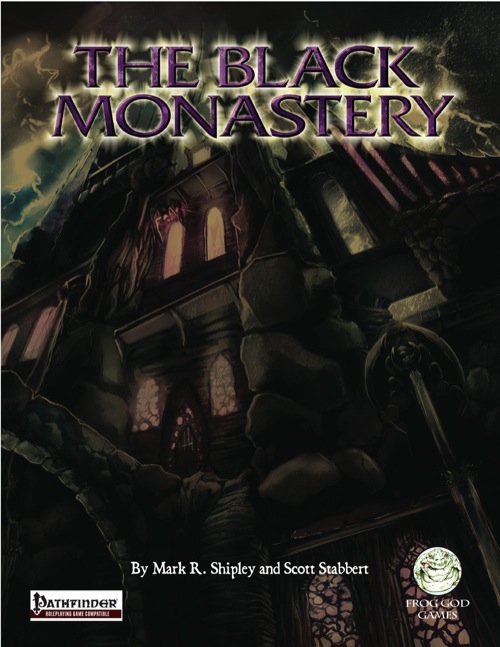
The Legend of the Black Monastery Two centuries have passed since the terrible events associated with the hideous cult known as the Black Brotherhood. Only scholars and story-tellers remember now how the kingdom was nearly laid to waste and the Black Monastery rose to grandeur and fell into haunted ruins. The Brothers first appeared as an order of benevolent priests and humble monks in black robes who followed a creed of kindness to the poor and service to the kingdom. Their rules called for humility and self denial. Other religious orders had no quarrel with their theology or their behavior. Their ranks grew as many commoners and nobles were drawn to the order by its good reputation. The first headquarters for the order was a campsite, located in a forest near the edge of the realm. The Brothers said that their poverty and dedication to service allowed them no resources for more grand accommodations. Members of the Black Brotherhood built chapels in caves or constructed small temples on common land near villages. They said that these rustic shrines allowed them to be near the people they served. Services held by the Brothers at these locations attracted large numbers of common people, who supported the Black Brotherhood with alms. Within 50 years of their first appearance, the Black Brotherhood had a number of larger temples and abbeys around the kingdom. Wealthy patrons endowed them with lands and buildings in order to buy favor and further the work of the Brothers. The lands they gained were slowly expanded as the order’s influence grew. Many merchants willed part of their fortunes to the Black Brotherhood, allowing the order to expand their work even further. The Brothers became bankers, loaning money and becoming partners in trade throughout the kingdom. Within 200 years of their founding, the order was wealthy and influential, with chapters throughout the kingdom and spreading into nearby realms. With their order well-established, the Black Brotherhood received royal permission to build a grand monastery in the hill country north of the kingdom’s center. Their abbot, a cousin of the king, asked for the royal grant of a specific hilltop called the Hill of Mornay. This hill was already crowned by ancient ruins that the monks proposed to clear away. Because it was land not wanted for agriculture, the king was happy to grant the request. He even donated money to build the monastery and encouraged others to contribute. With funds from around the realm, the Brothers completed their new monastery within a decade. It was a grand, sprawling edifice built of black stone and called the Black Monastery. From the very beginning, there were some who said that the Black Brotherhood was not what it seemed. There were always hints of corruption and moral lapses among the Brothers, but no more than any other religious order. There were some who told stories of greed, gluttony and depravity among the monks, but these tales did not weaken the order’s reputation during their early years. All of that changed with the construction of the Black Monastery. Within two decades of the Black Monastery’s completion, locals began to speak of troubling events there. Sometimes, Brothers made strange demands. They began to cheat farmers of their crops. They loaned money at ruinous rates, taking the property of anyone who could not pay. They pressured or even threatened wealthy patrons, extorting money in larger and larger amounts. Everywhere, the Black Brotherhood grew stronger, prouder and more aggressive. And there was more… People began to disappear. The farmers who worked the monastery lands reported that some people who went out at night, or who went off by themselves, did not return. It started with individuals…people without influential families…but soon the terror and loss spread to even to noble households. Some said that the people who disappeared had been taken into the Black Monastery, and the place slowly gained an evil reputation. Tenant farmers began moving away from the region, seeking safety at the loss of their fields. Slowly, even the king began to sense that the night was full of new terrors. Across the kingdom, reports began to come in telling of hauntings and the depredations of monsters. Flocks of dead birds fell from clear skies, onto villages and city streets. Fish died by thousands in their streams. Citizens reported stillborn babies and monstrous births. Crops failed. Fields were full of stunted plants. Crimes of all types grew common as incidents of madness spread everywhere. Word spread that the center of these dark portents was the Black Monastery, where many said the brothers practiced necromancy and human sacrifice. It was feared that the Black Brotherhood no longer worshipped gods of light and had turned to the service of the Dark God. These terrors came to a head when the Black Brotherhood dared to threaten the king himself. Realizing his peril, the king moved to dispossess and disband the Black Brother hood. He ordered their shrines, abbeys and lands seized. He had Brothers arrested for real and imagined crimes. He also ordered investigations into the Black Monastery and the order’s highest ranking members. The Black Brotherhood did not go quietly. Conflict between the order and the crown broke into violence when the Brothers incited their followers to riot across the kingdom. There were disturbances everywhere, including several attempts to assassinate the king by blades and by dark sorcery. It became clear to everyone that the Black Brotherhood was far more than just another religious order. Once knives were drawn, the conflict grew into open war between the crown and the Brothers. The Black Brotherhood had exceeded their grasp. Their followers were crushed in the streets by mounted knights. Brothers were rounded up and arrested. Many of them were executed. Armed supporters of the Black Brotherhood, backed by arcane and divine magic, were defeated and slaughtered. The Brothers were driven back to their final hilltop fortress – the Black Monastery. They were besieged by the king’s army, trapped and waiting for the king’s forces to break in and end the war. The final assault on the Black Monastery ended in victory and disaster. The king’s army took the hilltop, driving the last of the black-robed monks into the monastery itself. The soldiers were met by more than just men. There were monsters and fiends defending the monastery. There was a terrible slaughter on both sides. In many places the dead rose up to fight again. The battle continued from afternoon into night, lit by flames and magical energy. The Black Monastery was never actually taken. The king’s forces drove the last of their foul enemies back inside the monastery gates. Battering rams and war machines were hauled up the hill to crush their way inside. But before the king’s men could take the final stronghold, the Black Brotherhood immolated themselves in magical fire. Green flames roared up from the monastery, engulfing many of the king’s men as well. As survivors watched, the Black Monastery burned away, stones, gates, towers and all. There was a lurid green flare that lit the countryside. There was a scream of torment from a thousand human voices. There was a roar of falling masonry and splitting wood. Smoke and dust obscured the hilltop. The Black Monastery collapsed in upon itself and disappeared. Only ashes drifted down where the great structure had stood. All that was left of the Black Monastery was its foundations and debris-choked dungeons cut into the stones beneath. The war was over. The Black Brotherhood was destroyed. But the Black Monastery was not gone forever. Over nearly two centuries since its destruction, the Black Monastery has returned from time to time to haunt the Hill of Mornay. Impossible as it seems, there have been at least five incidents in which witnesses have reported finding the Hill of Mornay once again crowned with black walls and slate-roofed towers. In every case, the manifestation of this revenant of the Black Monastery has been accompanied by widespread reports of madness, crime and social unrest in the kingdom. Sometimes, the monastery has appeared only for a night. The last two times, the monastery reappeared atop the hill for as long as three months…each appearance longer than the first. There are tales of adventurers daring to enter the Black Monastery. Some went to look for treasure. Others went to battle whatever evil still lived inside. There are stories of lucky and brave explorers who have survived the horrors, returning with riches from the fabled hordes of the Black Brotherhood. It is enough to drive men mad with greed – enough to lure more each time to dare to enter the Black Monastery.
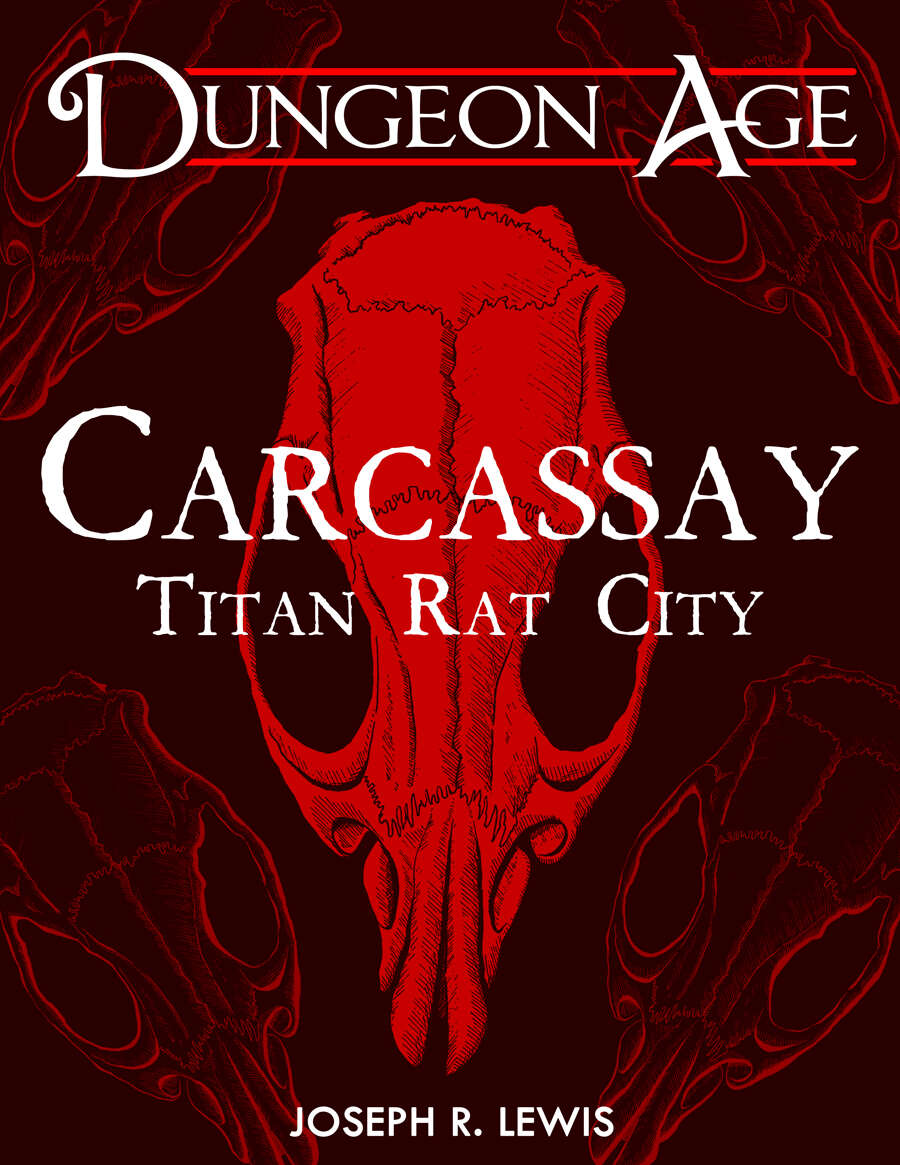
The ancient world of Harth withers beneath its dying sun…but it’s not dead yet. Welcome to the strange and dangerous city of Carcassay, huddled below the skeleton of a titan rat, sprawling above the ruins of countless dead civilizations. This is where folk come to find wealth, power, revenge, secrets, oblivion… and everything in between. Carcassay is a sandbox city adventure. There are many locations to explore in, around, and under the city. Players can explore any place at any time, and may radically reshape the city’s politics, economy, religions, and physical existence. There are standard dungeons stacked under the city, and GMs are encouraged to keep adding more dungeons… all the way down. Tone. It leans more toward low fantasy or sword-and-sorcery. Most shops look like real shops. Most people look like real people. But strange and horrible things lurk everywhere as soon as you start to scratch the surface. This is my Lankhmar. Carcassay is a vast, bizarre city. It has over 100 locations where you can meet Chaos cultists, Lawful knights, retired adventurers, shopkeepers, brewers, musicians, artists, scientists, hermits, royalty, beggars, doctors, space vampires, eldritch horrors, machine priests, crab colonists, mushroom farmers, mummies, assassins, and diplomats from distant lands… and the moon. And every one of them has goods or services to sell, and a quest (or three) to offer. What sort of quests? Fetch a relic, assassinate a rival, find a relative, steal a soul, implant an agent, cure a disease, stop a riot, solve a murder that hasn’t happened yet, hunt a thief, locate a shrine… the list goes on. And for every Quest, there is a specific Reward: money, weapons, relics, Chaos mutations, exclusive memberships, information, Angelic miracles… the list goes on. This is a place where you can make a lot of money, but also where you can spend that money on interesting goods and services. Factions? We have a few. Seven Chaos cults, five knightly orders, two mercenary companies, four wealthy families, six (seven!) Corpse Lords, foreign diplomats, rival innkeepers, rival tavern owners, plus all the dungeon-delving gangs currently mucking about underground. When you grow weary of all the adventures at ground level, there are three classic dungeons buried under the city to explore. This book contains months (if not years) of campaigning. Enjoy the Chaos.

Randal Morn certainly has his hands full! The temple of Lathander, which burned to the ground eight years ago, seems to be the source of a curse affecting the entire town. People are taking ill, animals are dying overnight, crops are failing. All this seems to have started after Eragyn, priestess of Cyric, disappeared from Daggerdale. Shortly before that, a forgotten mage-lord's crypt was discovered and opened, and things just haven't been the same since. Constable Tren is displeased with the situation, what with suspicion being cast in the Zhentarim's direction as well as toward Cyric's priesthood. He's undoubtedly making the Dalesfolk's lives more difficult than usual because of this upheaval. Randal has sent out the call for aid to all who are interested and able to help; his freedom riders have their hands full already. A missing evil priestess, a mage-lord's crypt-curse, a plague, and possible Zhentarim involvement: all the elements of a rousing adventure in one place! Where do your characters sign up? Step right this way, won't you? TSR 9391

Local villagers whisper of a mysterious place deep in the marsh - a place shrouded in mist and dotted with barrow mounds, ruined columns, and standing stones. The tomb-robbers who explore beneath the mounds - or rather the few who return - tell tales of labyrinthine passages, magnificent grave goods, and terrifying creatures waiting in the dark. Are you brave (or foolish) enough to enter Barrowmaze? Barrowmaze Complete (BMC) is a classic megadungeon for use with any old school fantasy role-playing game. BMC includes everything in Barrowmaze I and II in the same book in addition to new material, art, layout, and cover art by Ex-TSR artist Erol Otus. Barrowmaze Complete will keep your players on their toes and your campaign going strong. BMC is brought to you by the Old School Renaissance (so don’t forget your 10’ pole). This edition includes art by the aforementioned TSR artists Erol Otus, as well as Tim Truman, Jim Holloway. New old-school artists include Peter Pagano, Cory Hamel, Stefan Poag, Zhu Bajie, Stephan Thompson, and others.
:strip_icc()/pic2633966.jpg)
Heroes and blackguards of every stripe will find peril on the Purple Planet, but none more than 0-level PCs. Cast across the cosmos, surrounded by hordes of baying man-beasts, and marched into mass gladiatorial combat, the PCs' death waits with bated breath. Their sole hope for escape lies – not in pitched combat against endless hordes – but by braving the unknown and pressing into the darkness beneath the Purple Planet.
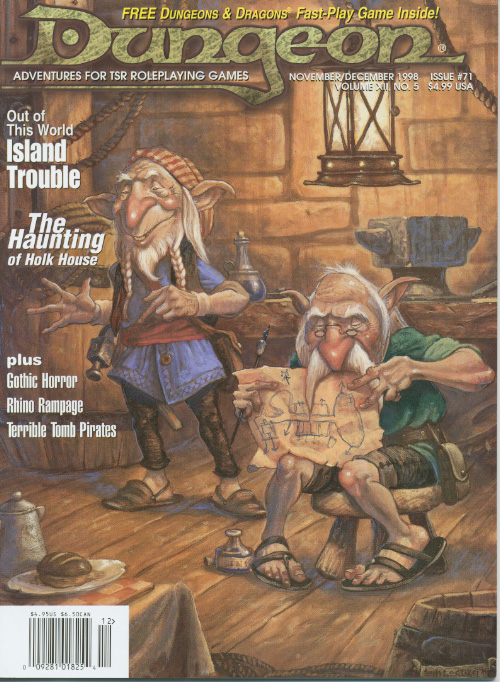
Something's rotten in Restenford! A plague of giant rats is the least of Restenford's worries. The adventure is set in the town of Restenford but with a little work can be adapted to fit almost any setting that features pirates (or once did). Pgs. 10-29

Adventure in a wizard's highly magical tomb. While still in college, Jennell Jaquays, writing as Paul, started The Dungeoneer fanzine. For the first issue, Jaquays wrote F’Chelrak’s Tomb. The pioneering adventure and its successors proved memorable. Looking back at The Dungeoneer, Jaquays said, “It’s the adventures that stand out, and not simply because no one else was doing mini-adventures in 1976. When I read comments about the magazine or talk to fans (old and new), no one talks about the monsters, or the art, or the magic items and rules variants. It’s always the adventures.”
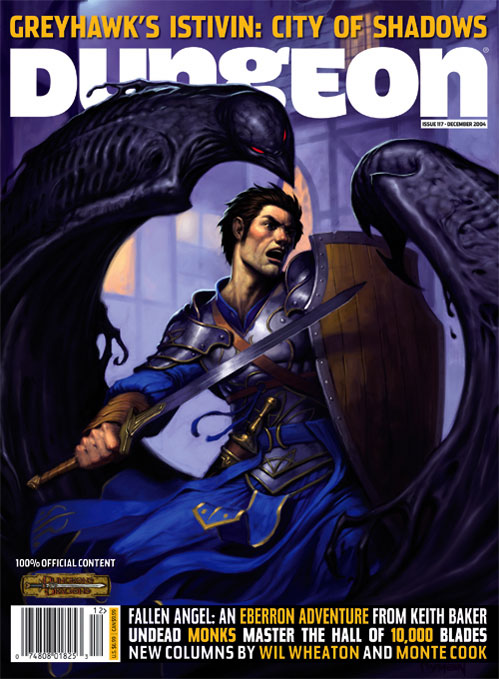
On Olarune 9th in the 918th year since the founding of the Kingdom, one of the city of Sharn's floating towers fell from the sky, crusing much of the Godsgate District. Now, a band of bestial savages searches Godsgate for the remnants of a broken statue, pulling the PCs into a plot that could destroy Sharn itself. The city of Sharn is one of the wonders of Khorvaire. Its towers seem to touch the sky, rising up more than a mile from the shores of the Dagger River. But it takes more than stone and steel to support the spires of Sharn: the area is suffused with mystical energy drawn from the plane of Syrania, which empowers all forms of flight. Yet with such wondrous inventions come wondrous tragedies, for when the magic of a flying tower fails, it has to land somewhere... Pgs. 18-29

A generic tomb exploration. Usable for a quick one off or random exploration discovery. Sometimes a DM needs a fill-in adventure for when their PC’s go off script. This is a single location low role play adventure that can be inserted anywhere needed.
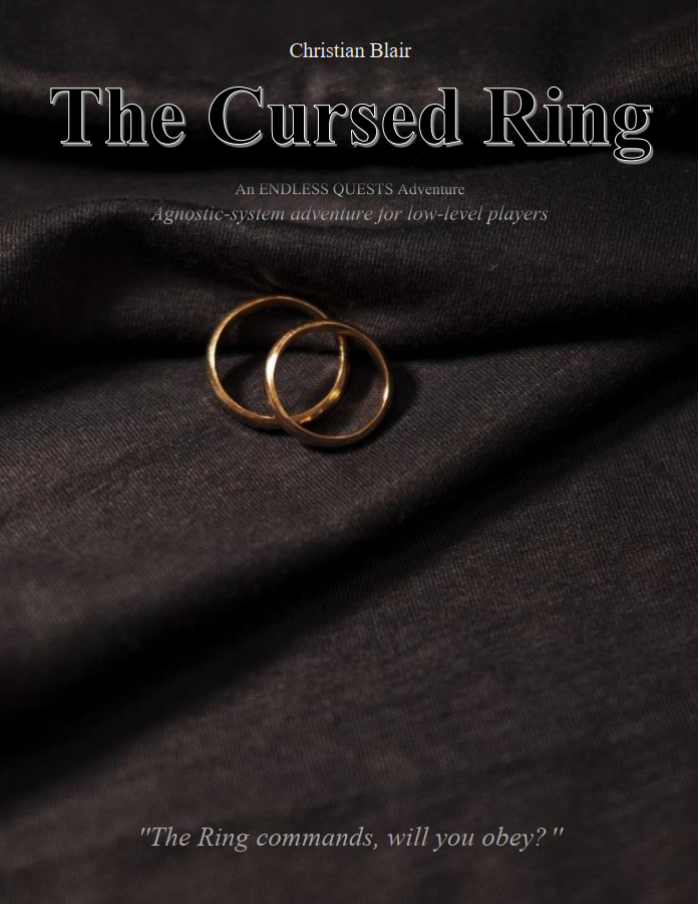
(EQ1) The Cursed Ring is a generic fantasy short adventure for low-level players, themed around puzzle hunting, traps, and monster combat. It is designed to be solved in approximately 5-6 hours, depending on the size of the party and skill of the players. This adventure takes place in a cursed fortress, where they must find a powerful mythical ring capable of granting great power, in exchange for enormous sacrifices. Players must recover the ring and get out of this dangerous place alive.
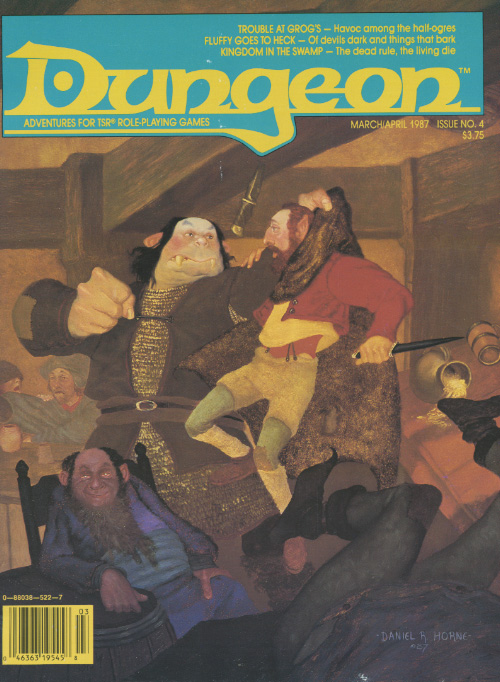
Two thieves' guilds fight to the death - with you in the middle. Run silently; the Midnight Stalkers are after you. Escape from the Tower of Midnight is an AD&D* game module for 2-6 thieves of 2nd-4th level. The Dungeon Master may change the names of the thieves’ guilds, countries, deities, and so forth to fit the individual campaign. Note that all player characters are assumed to have been imprisoned at the start of the adventure; little or no equipment will be available at first. This module is well suited for tournament use. Adventure Background It must be assumed, for the sake of the adventure to follow, that the PCs have no way of avoiding capture by the Midnight Stalkers. However, the DM may find a way to play out this adventure and have some or all of the PCs captured, allowing any who escape to attempt to rescue their comrades. Pgs. 16-27

Kind words and a scrap of paper are enough to lead you off on an adventure into the hills. You and your party have opted to follow the clues leading to a fabled Talisman of Otek lost years ago in an old dungeon. Your benefactor has warned you that some cultists are actively seeking the item and hope that the “heroes in the making” will obtain the item before the nasty fanatics get ahold of it and use it for nefarious purposes!

Inside the woods near Burke's Crossing lurks a very real danger. It began as a sense of unease, a feeling of being watched, but now people are disappearing. The lumberjacks who have stayed in the little village talk of ghosts and other superstitions. Or at least they did - until a mysterious statue appeared in a clearing near the logging camp. As if matters weren't strange enough, two mages have arrived and begun hiring armed guards to escort them into these very same woods. Is there a connection, or is it just coincidence? Either way, be prepared! You never know what's out there waiting... and watching. "Eye of Pain" is the first of three Monstrous Arcana adventures featuring the cunning and deadly beholder. If can be played as an individual adventure or as part of the series which continue in "Eye of Doom" and concludes in "Eye to Eye." For four to six characters of levels 4-8.

A chance encounter on the road leads to the beginning of a grand adventure. It is very much a first time adventure for new characters to dip their feet in. Can easily be adjusted to a bigger or smaller adventure. This is the first adventure in a miniseries with the following adventures being: A Mystic Circle An Urgent Rescue A Dark Veil Falls

"Wherein the local clergy makes the terrible mistake of not hiring enough assassins for the job." Synopsis: The heroes have just returned from the abyss (Occipitus) and reestablish themselves in Cauldron, when they are assaulted by a group of professional assassins. After they repel the attack, they trace back the lead to the temple of Wee Jas, where they find plenty of opposition from the second in command, Ike Iverson. After dispatching of the cleric and securing of a (spare) soul cage, the group finds evidence of a place important to the cagewrights' cause - an ancient underground complex named Karran Kurral. Mounting an expedition to that place, they find more evidence towards the horrific destiny on schedule for Cauldron. However, they gain access to the Soul Pillars after defeating a dracolich, that they can use to gather plenty of intelligence on the cagewrights' plans. Pgs. 12-51

The ravings of a mad prophet claim that a great evil has returned to Alik'bar and that this time, there shall be no salvation. Even those who previously vanquished the evil will be unable to stop it. Terror now grips the lower class populace while the guards and merchant class go about their days, ignoring the "Stories" of an unseen menace. "There is nothing wrong here," come the stern replies of the city guard. All the while the Mayor and his people retort, "the Evil in Alik'bar was banished long ago. This is nothing but vagrants and charlatans, begging for attention." The Church of Salvation has another opinion, but their words die down in a city griped with tension , apathy, and a demoralized poor class. The question remains: Why is there fear running in a city's slums? What does it have anything to do with the missing vagrants who disappeared so many years ago? Is there really a great threat, or is there a simpler answer? This is a sandboxy, mystery adventure in a city. There are secretly a green and a blue dragon leading factions in the city. In Cold Blood was updated to D&D 3.5 for the AEG adventure compilation 'Adventure II'
The forlorn Falkrest Abbey in the icy Lune Mountains is where the Queens and Kings of Yore used to be crowned and buried, along with their treasures. According to legends, the Fountain of St. Brynedd still pours its miraculous water somewhere inside. But what caused the fall of the blessed Abbey? Falkrest Abbey is a level 1–3 dungeon adventure for Old-School Essentials. Written by Andrea Tupac Mollica and Giuseppe Rotondo, with original art by Zaira Diana. Content: A 19 room dungeon with exploration, combat, mystery, puzzles and NPCs Encounters and events along the way on the icy Lune Mountains Several hooks and alternate outcomes with possible repercussions on your campaign 3 new monsters 2 new magic items, plus one almighty magic vial of miraculous water Original art by Zaira Diana Map drawn with dungeonscrawl Utility: Treasure & monsters overview sorted by room Interactive hyperlinked map and index Interactive hyperlinked map snippets accompanying room descriptions Printable hand-outs (optional) Extra files: VTT friendly maps without room numbers, monsters, secrets doors etc