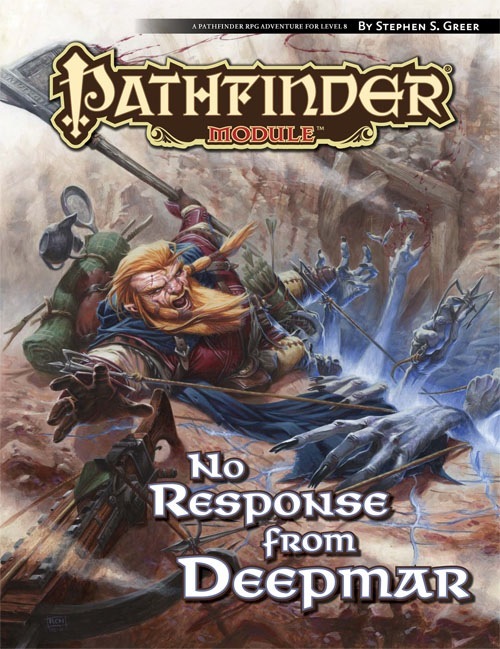
A hundred miles off the Chelish coast lies the remote island of Deepmar, where the House of Thrune sends prisoners to work in crystal mines, wresting valuable spell components from the depths of the earth. A month ago, all contact with the penal colony ceased, and now someone must discover what mysterious fate has befallen the prisoners and guards of this isolated mining operation.
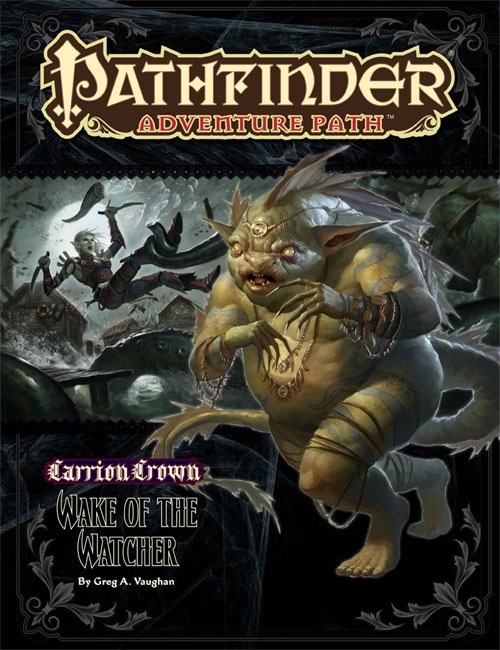
Part 4 of the Carrion Crown Adventure Path brings the heroes to the small fishing village of Illmarsh. The party is searching for a dark rider of the necromantic Whispering Way cult and will discover the strange practices of the deeply religious inhabitants of Illmarsh. Rumors of madness, strange disappearances and human sacrifices to things best left unnamed lead them to investigate the town church and its history. They'll find a desperate people, caught in a war between beings from beneath the seas and invaders from the darkest corners of the cosmos. Can the heroes save Illmarsh from its tradition of terror? It is worth noting that this story is heavily inspired by The Shadow over Innsmouth by H.P. Lovecraft and the role playing game Call of Cthulhu. If you're planning on going through the whole adventure path of Carrion Crown, the module Carrion Hill could easily be fit between book 3 and 4, as the party will travel directly through the area where this one shot adventure takes place. This book includes: - “Wake of the Watcher,” a Pathfinder RPG adventure for 9th-level characters, by Greg A. Vaughan - Blasphemous secrets of the foul faiths known collectively as the Old Cults and sanity-shattering gods such as Azathoth, Nyarlathotep, and Cthulhu, by James Jacobs - A giant bestiary filled with eight classic monsters inspired by the writing of H. P. Lovecraft and the tales of the Cthulhu Mythos, by James Jacobs and Greg A. Vaughan - Laurel Cylphra’s discovery that the dead aren’t the only dangers in Ardis in a new entry into the Pathfinder’s Journal, by F. Wesley Schneider.
The adventurer awakens buried in a coffin only to be inadvertently rescued by a goblin grave-robber. With no recollection of how they came to be buried alive, the adventurer is thrust into an encounter with the goblin and his party who have stolen a precious heirloom off their unconscious body. Before starting this adventure the GM and player should discuss what heirloom item the adventurer possesses. Though having immense sentimental value, the heirloom shouldn’t be magical, and it should be of minor monetary value. It should be a worn item that can easily be removed such as a ring, bracer or necklace.
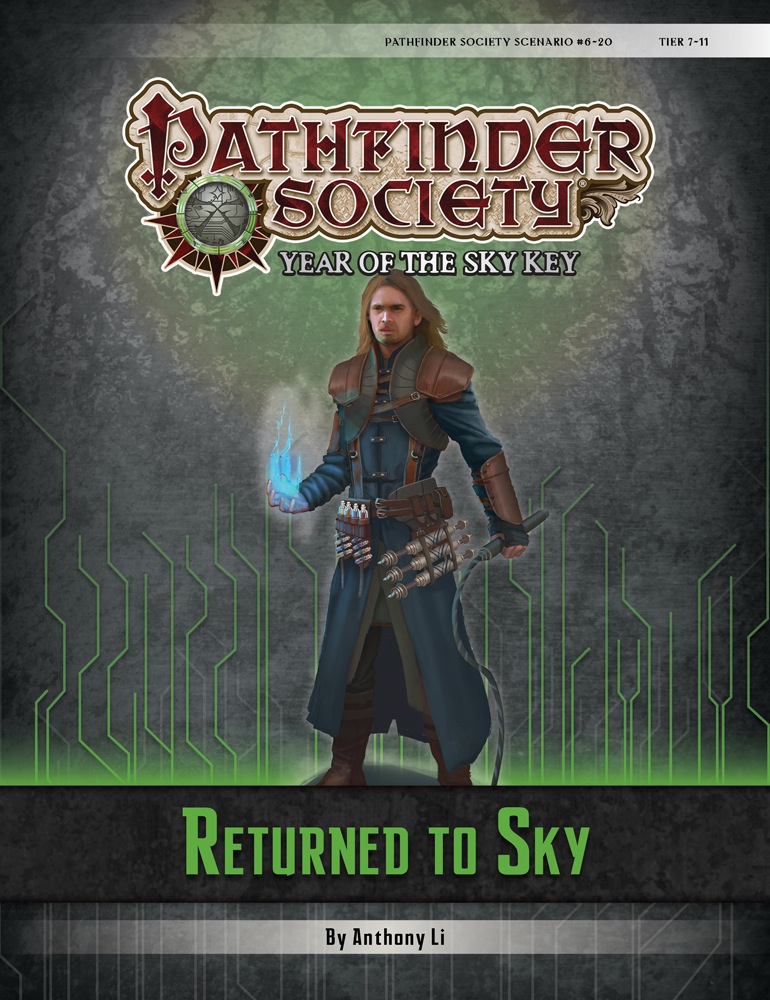
Part of a Numerian relic once thought scattered to the winds has found its way back to the savage land of super-science, and the Pathfinder Society must track down the component if they are to unlock the device’s secrets. Clues point to the economic hub Chesed, where only the descendants of a shattered clan can share where their revered ancestor buried the strange artifact. Can the PCs brave the troubled city, evade the vigilant agents of the Technic League, and survive a trip into the Numerian wastes? Content in “Returned to Sky” contributes directly to the Year of the Sky Key metaplot as well as the ongoing storyline of the Exchange, Liberty’s Edge, and Silver Crusade factions.
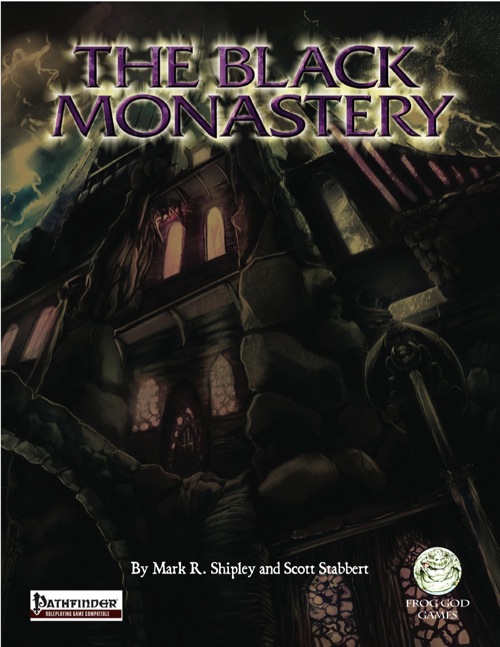
The Legend of the Black Monastery Two centuries have passed since the terrible events associated with the hideous cult known as the Black Brotherhood. Only scholars and story-tellers remember now how the kingdom was nearly laid to waste and the Black Monastery rose to grandeur and fell into haunted ruins. The Brothers first appeared as an order of benevolent priests and humble monks in black robes who followed a creed of kindness to the poor and service to the kingdom. Their rules called for humility and self denial. Other religious orders had no quarrel with their theology or their behavior. Their ranks grew as many commoners and nobles were drawn to the order by its good reputation. The first headquarters for the order was a campsite, located in a forest near the edge of the realm. The Brothers said that their poverty and dedication to service allowed them no resources for more grand accommodations. Members of the Black Brotherhood built chapels in caves or constructed small temples on common land near villages. They said that these rustic shrines allowed them to be near the people they served. Services held by the Brothers at these locations attracted large numbers of common people, who supported the Black Brotherhood with alms. Within 50 years of their first appearance, the Black Brotherhood had a number of larger temples and abbeys around the kingdom. Wealthy patrons endowed them with lands and buildings in order to buy favor and further the work of the Brothers. The lands they gained were slowly expanded as the order’s influence grew. Many merchants willed part of their fortunes to the Black Brotherhood, allowing the order to expand their work even further. The Brothers became bankers, loaning money and becoming partners in trade throughout the kingdom. Within 200 years of their founding, the order was wealthy and influential, with chapters throughout the kingdom and spreading into nearby realms. With their order well-established, the Black Brotherhood received royal permission to build a grand monastery in the hill country north of the kingdom’s center. Their abbot, a cousin of the king, asked for the royal grant of a specific hilltop called the Hill of Mornay. This hill was already crowned by ancient ruins that the monks proposed to clear away. Because it was land not wanted for agriculture, the king was happy to grant the request. He even donated money to build the monastery and encouraged others to contribute. With funds from around the realm, the Brothers completed their new monastery within a decade. It was a grand, sprawling edifice built of black stone and called the Black Monastery. From the very beginning, there were some who said that the Black Brotherhood was not what it seemed. There were always hints of corruption and moral lapses among the Brothers, but no more than any other religious order. There were some who told stories of greed, gluttony and depravity among the monks, but these tales did not weaken the order’s reputation during their early years. All of that changed with the construction of the Black Monastery. Within two decades of the Black Monastery’s completion, locals began to speak of troubling events there. Sometimes, Brothers made strange demands. They began to cheat farmers of their crops. They loaned money at ruinous rates, taking the property of anyone who could not pay. They pressured or even threatened wealthy patrons, extorting money in larger and larger amounts. Everywhere, the Black Brotherhood grew stronger, prouder and more aggressive. And there was more… People began to disappear. The farmers who worked the monastery lands reported that some people who went out at night, or who went off by themselves, did not return. It started with individuals…people without influential families…but soon the terror and loss spread to even to noble households. Some said that the people who disappeared had been taken into the Black Monastery, and the place slowly gained an evil reputation. Tenant farmers began moving away from the region, seeking safety at the loss of their fields. Slowly, even the king began to sense that the night was full of new terrors. Across the kingdom, reports began to come in telling of hauntings and the depredations of monsters. Flocks of dead birds fell from clear skies, onto villages and city streets. Fish died by thousands in their streams. Citizens reported stillborn babies and monstrous births. Crops failed. Fields were full of stunted plants. Crimes of all types grew common as incidents of madness spread everywhere. Word spread that the center of these dark portents was the Black Monastery, where many said the brothers practiced necromancy and human sacrifice. It was feared that the Black Brotherhood no longer worshipped gods of light and had turned to the service of the Dark God. These terrors came to a head when the Black Brotherhood dared to threaten the king himself. Realizing his peril, the king moved to dispossess and disband the Black Brother hood. He ordered their shrines, abbeys and lands seized. He had Brothers arrested for real and imagined crimes. He also ordered investigations into the Black Monastery and the order’s highest ranking members. The Black Brotherhood did not go quietly. Conflict between the order and the crown broke into violence when the Brothers incited their followers to riot across the kingdom. There were disturbances everywhere, including several attempts to assassinate the king by blades and by dark sorcery. It became clear to everyone that the Black Brotherhood was far more than just another religious order. Once knives were drawn, the conflict grew into open war between the crown and the Brothers. The Black Brotherhood had exceeded their grasp. Their followers were crushed in the streets by mounted knights. Brothers were rounded up and arrested. Many of them were executed. Armed supporters of the Black Brotherhood, backed by arcane and divine magic, were defeated and slaughtered. The Brothers were driven back to their final hilltop fortress – the Black Monastery. They were besieged by the king’s army, trapped and waiting for the king’s forces to break in and end the war. The final assault on the Black Monastery ended in victory and disaster. The king’s army took the hilltop, driving the last of the black-robed monks into the monastery itself. The soldiers were met by more than just men. There were monsters and fiends defending the monastery. There was a terrible slaughter on both sides. In many places the dead rose up to fight again. The battle continued from afternoon into night, lit by flames and magical energy. The Black Monastery was never actually taken. The king’s forces drove the last of their foul enemies back inside the monastery gates. Battering rams and war machines were hauled up the hill to crush their way inside. But before the king’s men could take the final stronghold, the Black Brotherhood immolated themselves in magical fire. Green flames roared up from the monastery, engulfing many of the king’s men as well. As survivors watched, the Black Monastery burned away, stones, gates, towers and all. There was a lurid green flare that lit the countryside. There was a scream of torment from a thousand human voices. There was a roar of falling masonry and splitting wood. Smoke and dust obscured the hilltop. The Black Monastery collapsed in upon itself and disappeared. Only ashes drifted down where the great structure had stood. All that was left of the Black Monastery was its foundations and debris-choked dungeons cut into the stones beneath. The war was over. The Black Brotherhood was destroyed. But the Black Monastery was not gone forever. Over nearly two centuries since its destruction, the Black Monastery has returned from time to time to haunt the Hill of Mornay. Impossible as it seems, there have been at least five incidents in which witnesses have reported finding the Hill of Mornay once again crowned with black walls and slate-roofed towers. In every case, the manifestation of this revenant of the Black Monastery has been accompanied by widespread reports of madness, crime and social unrest in the kingdom. Sometimes, the monastery has appeared only for a night. The last two times, the monastery reappeared atop the hill for as long as three months…each appearance longer than the first. There are tales of adventurers daring to enter the Black Monastery. Some went to look for treasure. Others went to battle whatever evil still lived inside. There are stories of lucky and brave explorers who have survived the horrors, returning with riches from the fabled hordes of the Black Brotherhood. It is enough to drive men mad with greed – enough to lure more each time to dare to enter the Black Monastery.
When strange reports of misty undead spread through Absalom, you and your fellow Pathfinders are dispatched to the half-drowned district of Puddles. Notoriously rough, the drooling addicts, flesh panderers, and quick-handed knifers of Puddles are the least of your worries. The night's tide brings with it an ancient armada of some long-forgotten war and you are the only thing between their mist-shrouded ghost fleet and Absalom's utter oblivion.

Beginning in the prison of the Castellan of Whitecliff, this campaign arc takes the players from level one to four, presented as a sandbox area in a lonely and gritty peninsula full of villains and opportunities for the players to explore. Much like Stonehell, but for regional play. Published by Coldlight Press

In the frozen depths of winter, murderous winds mercilessly batter the crumbling Priory of Cymer. Within, trapped by their duty and the heaped snowdrifts that render travel near impossible, the few remaining faithful huddle together and tend the sacred places of their forbears. With the weather worsening, nerves fray and tempers snap as the wind howls its mournful dirge for the forgotten dead of a fallen time. But the worst is yet to come. One of those trapped within holds a murderous grudge that only blood can expunge and as the storm reaches its savage height terrible revenge is wrought amid the frigid halls and faded glories of a bygone age. A 1st level adventure that is so much more than a trip to stop goblins killing cows. Great NPCs and a great location gives this the feel of The Name Of The Rose.
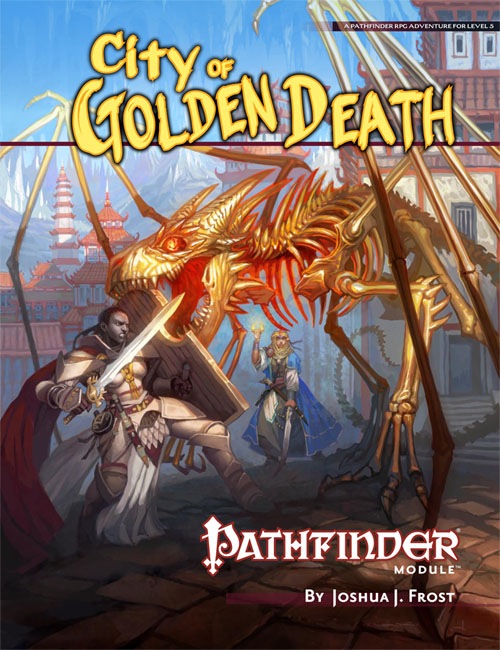
In the center of Lake Encarthan looms the dreaded Isle of Terror, accursed land of mystery and treachery. Hidden within the island's negative energy storms, the secret treasure city of the wizard-king Tar-Baphon has lain sealed for centuries. Now masked cultists have opened the golden city of Xin-Grafar to claim the wealth of the legendary city for the Living God Razmir. Can the PCs track the cultists through the poisoned swamps and blasted wastelands of the Isle of Terror to the City of Golden Death itself? And what forgotten dangers will oppose them as they struggle to prevent a dark faith from spreading across the world? Part 3 of the Price of Immortality trilogy.
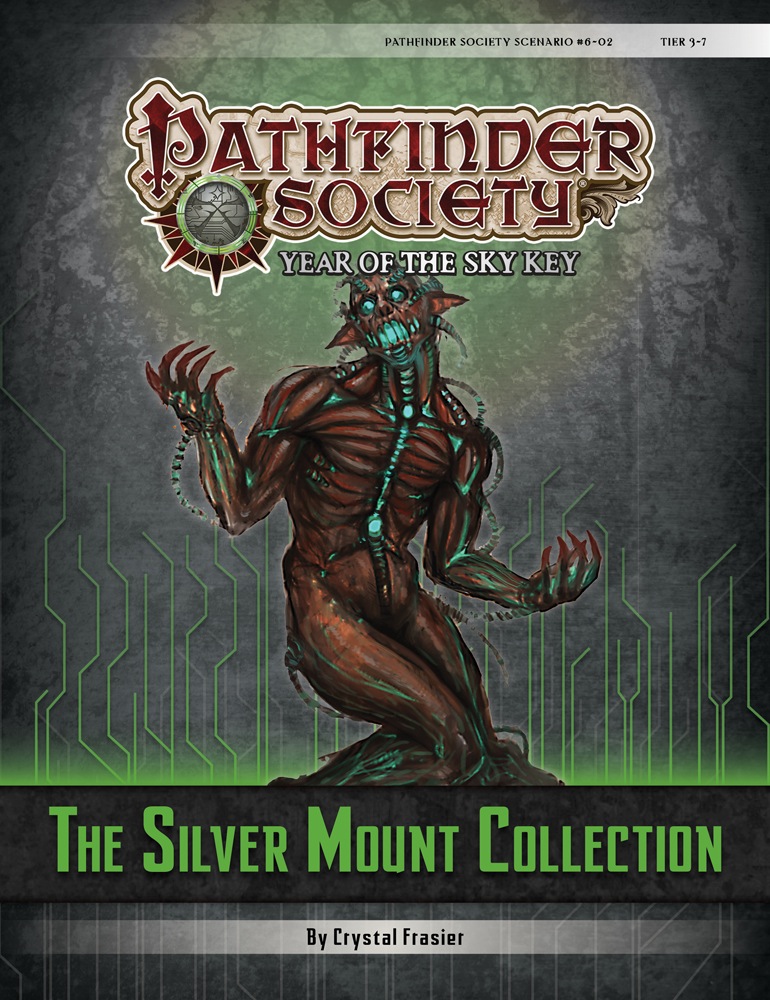
The esteemed Blakros family—famous for their museum in Absalom—receives a large shipment of artifacts from Numeria but fears that the ever-vigilant Technic League will attack to reclaim its "stolen" property. When they request the help of Pathfinders to help guard the collection, the PCs discover that the Technic League is the least of their worries. Content in “The Silver Mount Collection” contains faction missions for the Dark Archive.
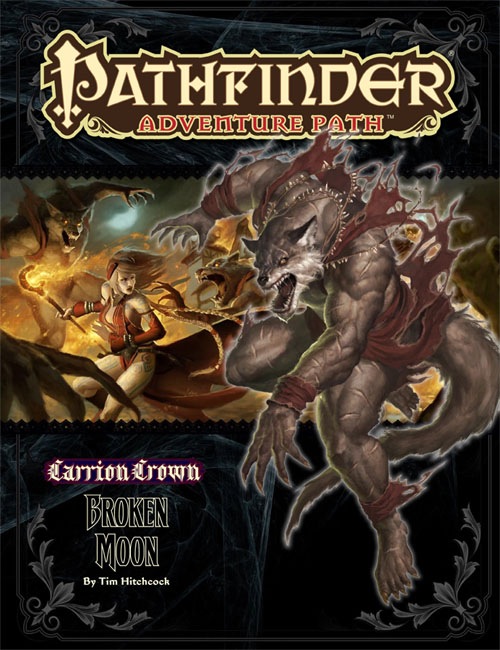
Part 3 of the Carrion Crown Adventure Path takes the heroes to the infamous Shudderwood in Ustalav. They travel to Ascanor lodge, the only safe place in the woods, to find more information on the necromantic cult The Whispering Way and meet a colorful group of npcs that reside at the lodge. The werewolf packs that live in the woods are on the brink of war as their pack leader has disappeared and as the heroes get involved, strange things start happening within the lodge. Soon all three story lines will intertwine and the heroes are left to piece the puzzle together and follow the trail left by The Whispering Way. It's worth noting that this book does an excellent job at fleshing out the npcs (lodge residents and werewolves) both through stat blocks and background information including history and motivations. This book includes: - “Broken Moon,” a Pathfinder RPG adventure for 7th-level characters, by Tim Hitchcock - The secrets of the Whispering Way, a notorious cult sworn to the powers of death and undeath, revealed in blasphemous detail, by Adam Daigle - Insights into the savage lives of werewolves, wererats, and other lycanthropes, by Gareth Hanrahan - Laurel Cylphra comes face to face with an ancient mystery in the Pathfinder’s Journal, by F. Wesley Schneider - Seven exciting and deadly new monsters, by Tim Hitchcock, Rob McCreary, and Patrick Renie
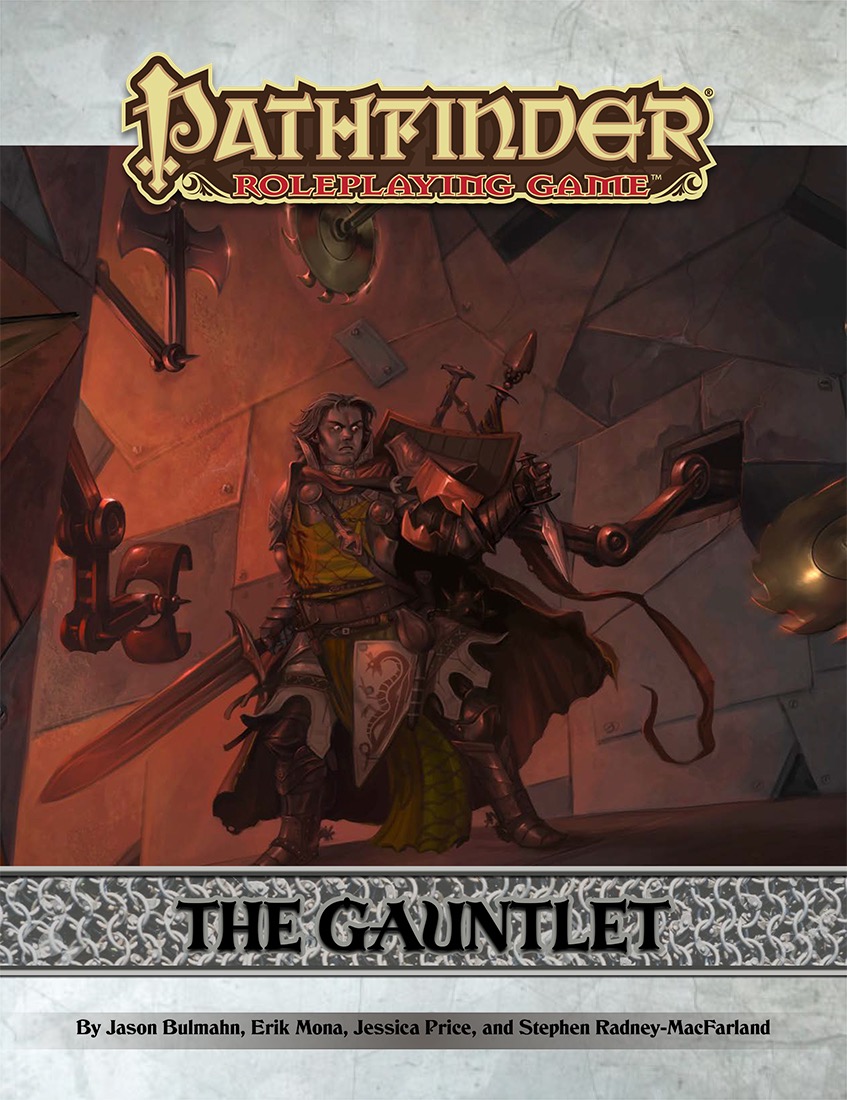
While the lives of most Pathfinder Society field agents is brutal and short, some rise to prominence, drawing the attention of the Decemvirate. These lucky agents are invited to a little known siege castle outside Absalom where they are asked to test their mettle. Those who succeed get their choice of prestigious missions, whereas those who fail are rarely heard from again. The players are run through an arena-style dungeon, faced with monsters, traps, and puzzles.
Book 6, and the conclusion, of the Iron Gods campaign: More than treasure waits within the alien chambers of Silver Mount - here, the greatest of the Iron Gods dwells, preparing for its triumphant emergence after eons of preparation. Having recruited allies from across the land and cowed the brutal rulership of Numeria’s capital city for the time being, the heroes are ready for an expedition into Silver Mount’s mysterious interior. What strange perils from beyond the stars await the PCs within the metal walls of one of Golarion’s most legendary dungeons? In trying to save Numeria, could the heroes be walking right into a trap?

The mountainous lands of the Last Kingdom have long been home to dangerous oni and their foul servitors and kin, but the unification of the Saigoto under the enlightened rulership of the Five Truths has sent them scurrying back into darkness. For years since, they have kept the land shielded from harm. Yet even the great soldiers garrisoned across the Kingdom’s shores and roads cannot stop dissent from boiling up in the shadows. Not everyone embraces the edicts of the land—and while patient teachers, even the Five Truths have their limits. As growing numbers of lastfolk begin to question the traditions of the Last Kingdom, forces far more sinister, preying on the curiosities of mortals, have begun to emerge into the light... Can the PCs discover and end a treacherous plot that threatens to destroy the relative peace of the Last Kingdom?
The Rise of the Runelords Adventure Path continues! A sudden string of brutal killings terrorizes the town of Sandpoint, and the killer's mark bears a familiar shape. Investigation leads to the Lost Coast's most notorious haunted mansion, a dilapidated ruin that has become the lair of a monstrous murderer. Yet this killer is but one of many, a member of a group of fanatic cutthroats calling themselves the Skinsaw Men. To defeat the cult, the PCs must travel to the bustling city of Magnimar to unravel the sinister source of these murders before they become the Skinsaw Men's next victims!
The Giants are on the March! The Rise of the Runelords Adventure Path continues! Driven to battle by a maniacal warlord, the once-peaceful stone giants of the Storval Plateau threaten to destroy the sleepy town of Sandpoint. Will fast action and quick wits be enough to save the defenseless community? Yet, even if the giants' initial raid can be repelled, only by striking at the heart of their titanic war machine—the black-towered fortress of Jorgenfist—can the menace be quelled. But who knows what mysterious bloodlust spurs the usually peaceful giants to war, or what mysteries lie beneath their ancient fortress?
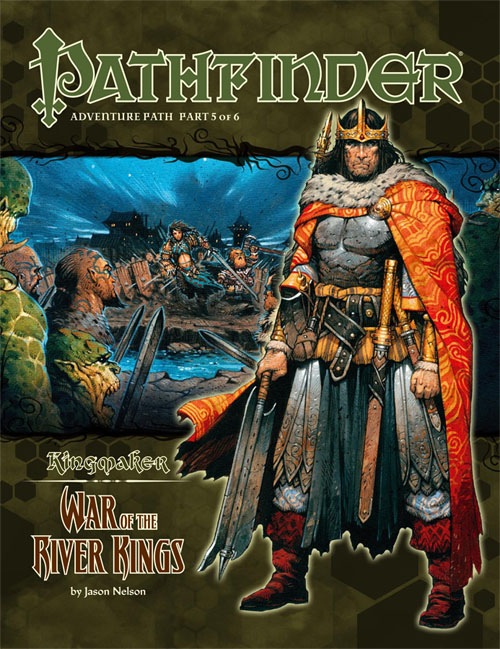
Can two kings truly trust one another? King Irovetti, ruler of Pitax and potential rival to the leaders of the eastern Stolen Lands, opens his gates and hospitality to the lords of that realm. Within his city of shallow indulgences and crude decadence, he hosts a tournament ostensibly meant to foster friendship and peace, but fraught with dangers all its own. Is the King of Pitax’s good will sincere, or does he harbor a more sinister goal? And are the PCs fated to gain an opponent who commands not only a nation, but allies from a deadly other realm?
From the idyllically peaceful coastal town of Sandpoint to an ancient lost city at the top of the world, Rise of the Runelords takes a party of adventurers from 1st to over 15th level and delves into the mysteries of Varisia's ancient past. Millennia ago, the powerful empire of Thassilon ruled the land, dominated by despotic runelords who maintained their power through harnessing the power of rune magic. Thought gone forever, the working of Thassilon are not so far beneath the surface and one of the runelords plans a return to power. Only the brave adventurers stand in his way. ” Burnt Offerings Five years after a tragic fire and spate of brutal murders, the people of Sandpoint eagerly anticipate the Swallowtail Festival to commemorate the consecration of the town’s new temple. At the height of the ceremony, disaster strikes! In the days that follow, a sinister shadow settles over Sandpoint. Rumors of goblin armies and wrathful monsters in forgotten ruins have set the populace on edge. As Sandpoint’s newest heroes, the PCs must deal with treachery, goblins, and the rising threat of a forgotten empire whose cruel and despotic rulers might not be as dead as history records.
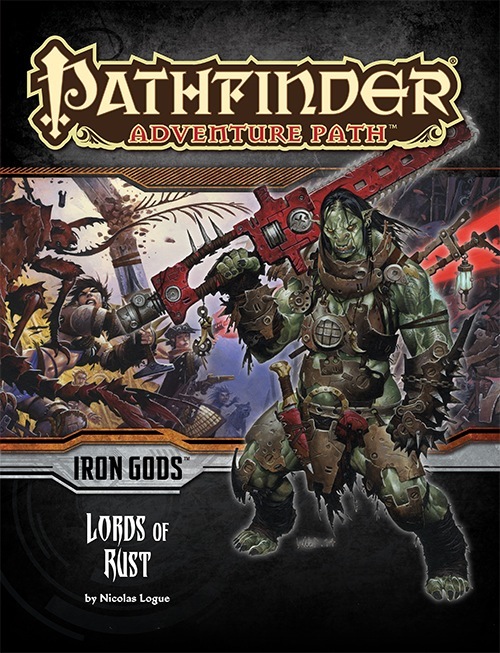
The heroes of the town of Torch follow a trail of clues to the sprawling junkyard known as Scrapwall, where bands of desperate and violent brigands vie for control of the technological remnants found within. The Lords of Rust dominate Scrapwall, and their swiftly rising power threatens more than just the town of Torch, for this gang has the support of one of the terrifying Gods of Numeria. What slumbers fitfully beneath the wreckage of Scrapwall could catapult the Lords of Rust into a new level of power if they're not stopped!
A Runelord Rises! The Rise of the Runelords Adventure Path concludes! The Runelord of Greed, Karzoug the Claimer, stirs in the legendary city of Xin-Shalast. There are more forces than an ancient evil wizard at work in this remote corner of Golarion, a place where the boundaries between reality and nightmare are unnaturally thin. Karzoug's minions have awakened as well, among them giants and dragons and devils and worse. Could there be an even deeper evil poised to emerge from the darkness at the dawn of time? Can the Rise of the Runelords be stopped?